Pinnacles is half of a volcano that erupted 195 miles away. The San Andreas Fault has spent 23 million years carrying it northwest, a couple of centimeters a year, and it is still moving.
Pinnacles is one of 63 national parks in ParkStamp, each with original stamp art drawn in the WPA poster tradition. Every design shows a specific real place in the park: somewhere with a name, a trail, and a view you can verify.
Recording the visit is free. Check in among the spires, add a trip from years ago, or let the app read the dates and locations off photos already on your phone.
The real NPS boundary, with the roads and towns you would actually use to get there.
Pinnacles, for people who count parks
A traveling volcano, talus caves, and the biggest bird in North America overhead.
The rocks started 195 miles southeast of here. Around 23 million years ago, a volcanic field erupted near what is now Lancaster, in the desert north of Los Angeles. It happened to sit astride the San Andreas Fault, which tore it in half and has been walking the western half northwest ever since, at roughly the speed fingernails grow. The spires and crags of the High Peaks are that orphaned half, eroded into shape in transit; the matching rocks still sit near Lancaster, going nowhere. Geologists used the two halves as clean evidence for how far the fault has slipped.
Theodore Roosevelt made it a national monument in 1908, largely on the campaigning of Schuyler Hain, a homesteader who led tours through the rocks and wrote the letters that got Washington's attention. The CCC did the heavy work in the 1930s: cutting the High Peaks trail into bare rock, with footholds chiseled into stone and handrails bolted to the cliffs, and building the small dam that made Bear Gulch Reservoir. In 2013, legislation made it the 59th national park, the first designated in nearly a decade.
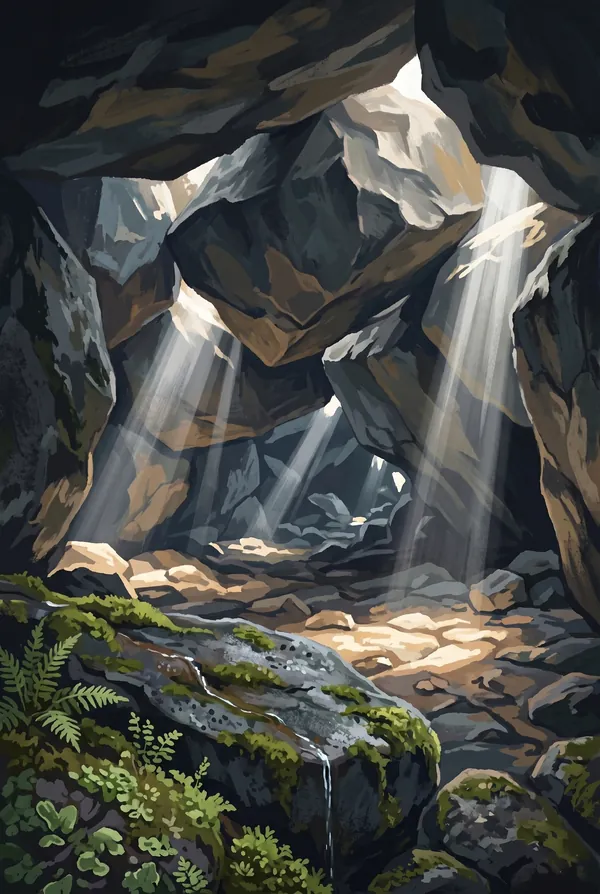
The caves here are not really caves. They are narrow gorges roofed by boulders that tumbled in and wedged: talus caves, formed by rockfall rather than water dissolving stone. Bear Gulch Cave has a stream running through it and stairways threading the dark. One practical oddity completes the park's character: the east and west entrances are connected by trail but not by road, so the park has two front doors and no hallway.
The condors are the modern chapter. California condors (nine-and-a-half-foot wingspan, down to 22 individuals in the world in the 1980s) have been released and managed at Pinnacles since 2003. It is one of a handful of places on Earth where you can reliably watch wild condors, often from the High Peaks in the morning as they catch the day's first thermals.
More bee species than almost anywhere on Earth, in a park you can cross in a day.
About 450 species of native bees have been documented in this one small park, roughly 26,000 acres, which researchers rank among the densest concentrations of bee diversity ever recorded anywhere. The reason is the overlap: chaparral, oak woodland and grassland interleave here, and the spring bloom runs long. Almost none of these bees make hives or honey; most are solitary and nest in the ground under your feet.
Bear Gulch Cave doubles as a nursery. A colony of Townsend's big-eared bats raises its pups in the cave (the Park Service calls it one of the largest maternity colonies in its range), and sections of the cave close when the bats need the dark to themselves. The schedule shifts with the colony, so check nps.gov before promising anyone the full cave.
The cliffs and the pool have their own tenants. Prairie falcons nest on the high rock in one of the densest concentrations known, and some cliffs close to climbers in nesting season. In Bear Gulch Reservoir, California red-legged frogs, the federally threatened frog of Mark Twain's jumping-frog story, breed in the shallows. Condors overhead, tagged and numbered, round out a wildlife list wildly out of proportion to the park's size.
The Pinnacles designs
Pick the one that matches the park you actually saw.
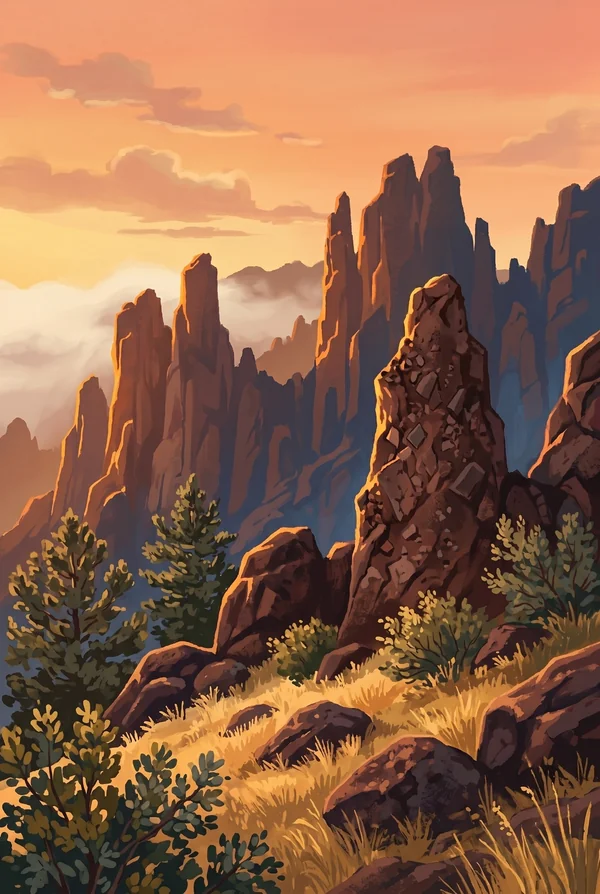
High Peaks Spires
The volcanic heart of the park: fins and monoliths of rosy breccia threaded by the trail the CCC carved in the 1930s, with steps cut into bare rock and handrails on the airy bits. Morning is condor time, when the largest birds in North America ride the first thermals off these rocks. The whole skyline traveled here from 195 miles away.
Bear Gulch Cave
A talus cave (a boulder-roofed gorge, not a limestone cavern) with a stream underfoot, stairs through the black, and a maternity colony of Townsend's big-eared bats in residence part of the year. Bring a light; the dark sections are genuinely dark. You emerge blinking at the base of the reservoir dam.
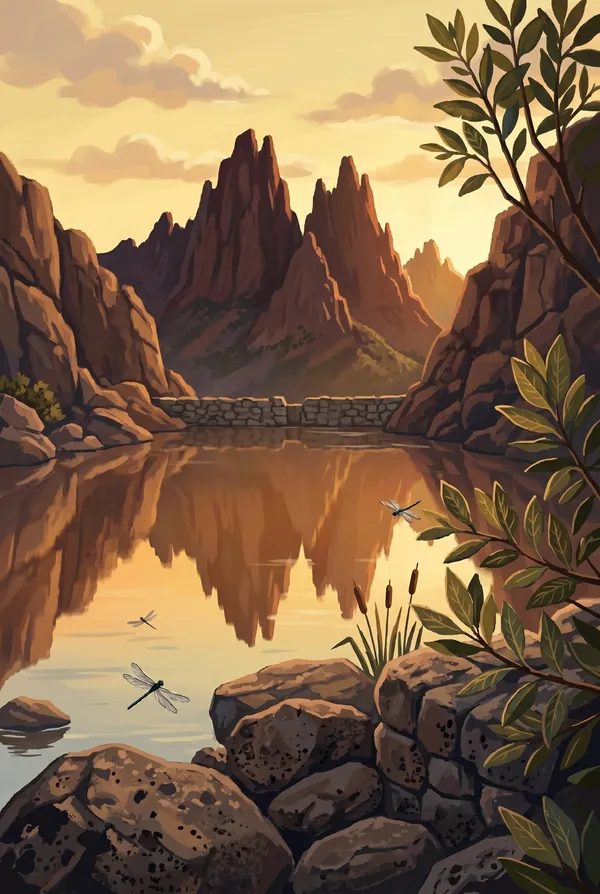
Bear Gulch Reservoir
The small blue-green pool above the cave, held back by a stone dam the CCC built in the 1930s, with pinnacles reflected in still water. Federally threatened red-legged frogs breed here. As a stamp it is the quiet counterpoint to the spires: the man-made touch that made this corner of the park a destination.
How to record your Pinnacles visit
Free, and it works whether you are standing there now or remembering a trip from years ago.
1
Check In at the park
Open ParkStamp inside the park boundary and check in. The app confirms you are actually there and logs the date.
2
Or Stamp It later
Already been? Pick the date yourself. Trips from decades ago count the same as last weekend.
3
Or scan your photos
Let ParkStamp read the dates and locations off photos already on your phone. Most people find parks they had forgotten.
Pinnacles, asked and answered
Quick answers, for people planning a trip and people remembering one.
When is the best time to visit Pinnacles?
Spring, without much argument: March through May greens the hills, runs the wildflower bloom that feeds 450 bee species, and keeps temperatures kind. Summer regularly tops 100°F in the interior, so hikes start at dawn or wait. Fall is mild and quiet; winter rains turn the grasslands green again and make for the clearest air of the year in the High Peaks.
How many days do you need at Pinnacles?
One full day covers the classic loop from the east side: up through the High Peaks among the spires and condors, down through Bear Gulch Cave, and out past the reservoir. A second day suits the west side (remember no road connects the two entrances) for the Balconies area, or simply an early morning spent watching for condors on the thermals.
How busy is Pinnacles?
Pinnacles National Park logged 343,208 visits in 2025, the 47th busiest of the 63 national parks. That makes it one of the quieter national parks, and crowds are rarely the problem.
What does the Pinnacles stamp show?
The lead Pinnacles design is High Peaks Spires. The volcanic heart of the park: fins and monoliths of rosy breccia threaded by the trail the CCC carved in the 1930s, with steps cut into bare rock and handrails on the airy bits. Morning is condor time, when the largest birds in North America ride the first thermals off these rocks. The whole skyline traveled here from 195 miles away. The other two designs are Bear Gulch Cave and Bear Gulch Reservoir.
Is the Pinnacles stamp free?
Recording your Pinnacles visit is always free: check in at the park, add an old trip, or let the photo scan find it. The full-color art is the paid part, $3.99 one-time with three Pinnacles designs to choose from, and the first stamp you collect in ParkStamp is free.
Can I add a Pinnacles trip from years ago?
Yes. Open Pinnacles in ParkStamp, tap Stamp It, and set the date yourself; a visit from decades ago counts the same as last weekend. If you still have photos from the trip, the photo scan can find and date it from their location tags, without your photos ever leaving your phone.
Do I have to be at Pinnacles to get the stamp?
No. Check In is for when you are standing inside Pinnacles, and it confirms you are actually there. Stamp It records any past visit on your honor, with your dates. Both are free and put the same stamp in your StampBook.
Start your StampBook with Pinnacles
Free on iOS and Android. Your first stamp is on us.