This was the first national park created to protect something people built. Around 600 cliff dwellings stand in the alcoves of this mesa, most of them raised inside a single century and standing empty by about 1300, though empty is the wrong word to the two dozen tribes whose ancestors built them.
Mesa Verde is one of the 63 national parks in ParkStamp, and like the rest it gets original stamp designs in the WPA poster tradition. Each design is an illustration of one specific real place, drawn from the spot where you would actually stand.
Recording the visit is free. Check in from the mesa, add a trip from years past, or let the app read the dates and places out of photos already on your phone.
The real NPS boundary, with the roads and towns you would actually use to get there.
Mesa Verde, for people who count parks
Seven centuries of farming, one century of building, and the theft that helped write a law.
The cliff dwellings are the finale, not the story. Ancestral Pueblo farmers were growing corn, beans and squash on the mesa top by around 550, and lived up there in pit houses and then pueblos for some six hundred years. Only late in the 1100s did they move down into the cliff alcoves and build the stone villages the park is famous for. And then, within roughly a century, they left. Tree rings record a punishing drought in the 1276-1299 window, and by about 1300 the mesa was quiet. The people did not vanish; they moved south, and their descendants live today in the pueblos of New Mexico and Arizona and among the Hopi. More than two dozen tribes maintain ties to this place.
Two cowboys in a snowstorm made it famous. On December 18, 1888, Richard Wetherill and Charlie Mason, chasing stray cattle across the mesa, looked over a canyon rim through falling snow and saw what Wetherill called a magnificent city: Cliff Palace. The Wetherill family guided, dug and sold artifacts for years afterward, standard practice at the time, and precisely the problem.
Then a Swedish scientist shipped the mesa's heritage to Europe, legally. Gustaf Nordenskiöld arrived in 1891, excavated with methods ahead of his time, and sent some 600 artifacts abroad; outraged locals had him arrested, but no law existed to charge him under. The collection ended up in the National Museum of Finland. The case became a standing argument for federal protection of antiquities. And in September 2020, Finland returned the remains of twenty individuals and their funerary objects to the associated tribes for reburial at Mesa Verde.
The park itself was largely won by women. Virginia McClurg and Lucy Peabody spent the better part of two decades lobbying, lecturing and organizing for protection. Congress passed the Antiquities Act on June 8, 1906, and three weeks later, on June 29, Theodore Roosevelt signed the bill creating Mesa Verde National Park: the first park set aside, in the language of the day, to preserve the works of man. In 1978 it became one of the first American World Heritage Sites, listed alongside Yellowstone.
Why farming worked at 7,000 feet, how alcoves form, and what the fires uncovered.
The green table is tilted, and that is the whole trick. Mesa Verde is a cuesta, a highland sloping gently south, so its surface catches more sun than flat ground and more rain and snow than the valleys below, and its deep windblown red soil holds the moisture. That combination is what let people dry-farm corn at 7,000 feet for seven centuries, and it is what the Spanish were describing when they named it the green table.
The alcoves are made by water, slowly. Snowmelt soaks down through the porous Cliff House Sandstone until it hits a layer of shale it cannot pass, then moves sideways and seeps out of the cliff face. The seeps keep the rock damp, winter freezes pry it apart grain by grain, and over thousands of years the cliff spalls into vaulted recesses. The same seep springs that carved the alcoves gave the people who lived in them their water.
The essential domestic animal here was the turkey. Ancestral Pueblo people kept flocks in and around the villages, wove blankets from turkey feathers wrapped on yucca cord, and by the cliff dwelling era relied on turkeys as a primary meat. Their wild descendants still strut the mesa top, sharing it with mule deer, black bears, and golden eagles working the canyon rims.
Fire keeps rewriting the surface. Lightning-caused wildfires since the mid-1990s have burned roughly half the park, taking piñon-juniper woodland that in places had stood for centuries and will take centuries to return. But the burns also stripped the ground cover and revealed hundreds of archaeological sites no one had recorded (walls, dams, field houses), so each fire has redrawn the map of what the mesa holds.
The Mesa Verde designs
Pick the one that matches the park you actually saw.
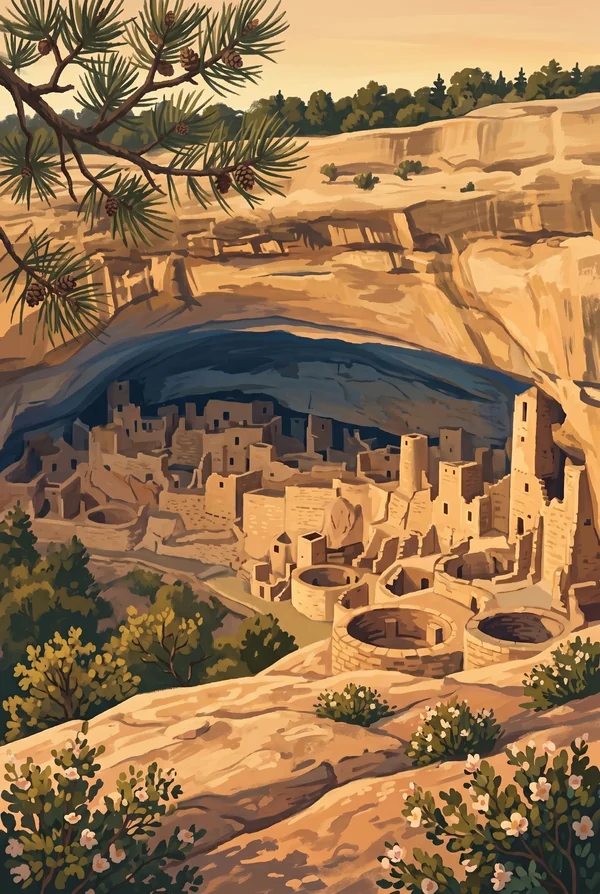
Cliff Palace
The largest cliff dwelling in North America: about 150 rooms and 23 kivas under a single sandstone arch, tree-ring dated to a building surge in the decades after 1190. This is the city Wetherill and Mason saw through the snow in 1888, and the image most people mean when they say Mesa Verde. The definitive stamp of the park.
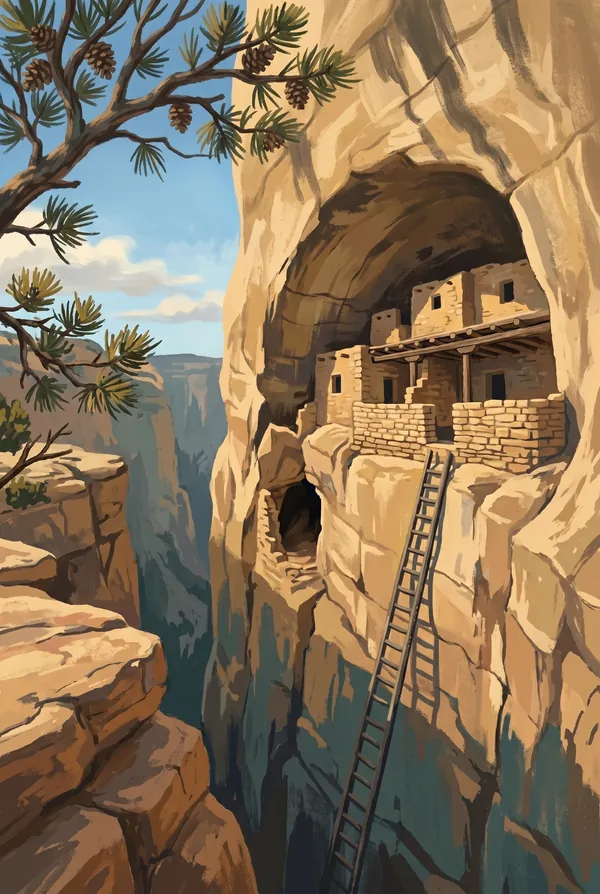
Balcony House
A mid-sized dwelling of about 38 rooms with an intact seep spring at the back of its alcove, reached the hard way: up a 32-foot ladder and out through a tunnel you crawl. Its perch and its single controlled approach have long made people read it as defensive. The stamp for visitors who earned it on the ladder.
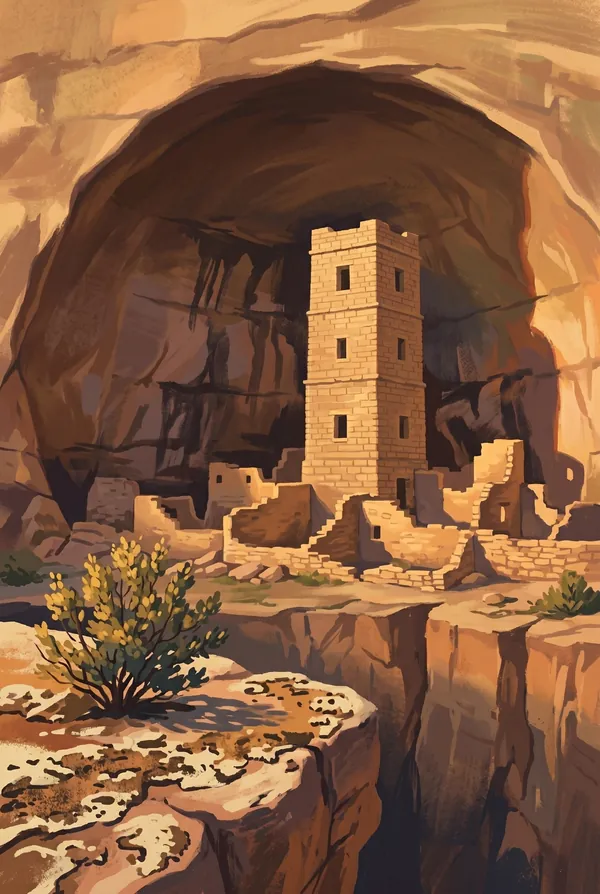
Square Tower House
Home of the tallest structure in the park, a four-story tower rising about 27 feet against the alcove wall, amid some 80 rooms that keep original plaster, paint, and one of the very few intact kiva roofs at Mesa Verde. Most people meet it from the overlook on the mesa top, which is exactly the view drawn here.
How to record your Mesa Verde visit
Free, and it works whether you are standing there now or remembering a trip from years ago.
1
Check In at the park
Open ParkStamp inside the park boundary and check in. The app confirms you are actually there and logs the date.
2
Or Stamp It later
Already been? Pick the date yourself. Trips from decades ago count the same as last weekend.
3
Or scan your photos
Let ParkStamp read the dates and locations off photos already on your phone. Most people find parks they had forgotten.
Mesa Verde, asked and answered
Quick answers, for people planning a trip and people remembering one.
When is the best time to visit Mesa Verde?
Late May through June and September through mid-October are the sweet spots: warm mesa-top days, cool nights, and the full slate of cliff dwelling visits typically running. High summer works but brings heat, crowds and afternoon lightning storms that sweep the mesa. Winter is genuinely beautiful (snow on Cliff Palace is the park's best photograph), though visits then are mostly from the overlooks.
How many days do you need at Mesa Verde?
Two days is right. Spend the first on Chapin Mesa: a ranger-led cliff dwelling, the museum, and the Mesa Top Loop with its overlooks of Square Tower House and Cliff Palace. Use the second for Balcony House or the quieter Wetherill Mesa side. Note the entrance road itself climbs 21 miles from the highway, so budget the drive.
How busy is Mesa Verde?
Mesa Verde National Park logged 463,130 visits in 2025, the 43rd busiest of the 63 national parks. That makes it one of the quieter national parks, and crowds are rarely the problem.
What does the Mesa Verde stamp show?
The lead Mesa Verde design is Cliff Palace. The largest cliff dwelling in North America: about 150 rooms and 23 kivas under a single sandstone arch, tree-ring dated to a building surge in the decades after 1190. This is the city Wetherill and Mason saw through the snow in 1888, and the image most people mean when they say Mesa Verde. The definitive stamp of the park. The other two designs are Balcony House and Square Tower House.
Is the Mesa Verde stamp free?
Recording your Mesa Verde visit is always free: check in at the park, add an old trip, or let the photo scan find it. The full-color art is the paid part, $3.99 one-time with three Mesa Verde designs to choose from, and the first stamp you collect in ParkStamp is free.
Can I add a Mesa Verde trip from years ago?
Yes. Open Mesa Verde in ParkStamp, tap Stamp It, and set the date yourself; a visit from decades ago counts the same as last weekend. If you still have photos from the trip, the photo scan can find and date it from their location tags, without your photos ever leaving your phone.
Do I have to be at Mesa Verde to get the stamp?
No. Check In is for when you are standing inside Mesa Verde, and it confirms you are actually there. Stamp It records any past visit on your honor, with your dates. Both are free and put the same stamp in your StampBook.
Start your StampBook with Mesa Verde
Free on iOS and Android. Your first stamp is on us.