In 1964 a graduate student, with official permission, cut down a bristlecone pine on Wheeler Peak and counted the rings: 4,862 of them, and the count was a minimum. The tree, later named Prometheus, turned out to be the oldest living thing anyone had ever found. The park that now protects its grove was still twenty-two years away.
Great Basin is one of 63 national parks in ParkStamp, each with its own original stamp designs drawn in the WPA poster tradition; every design is an illustration of a specific real place you can actually go stand.
Recording your visit is free. Check in while you're there, backfill a trip from years ago, or let the app pull the dates and locations from photos already on your phone.
The real NPS boundary, with the roads and towns you would actually use to get there.
Great Basin, for people who count parks
The oldest tree, a cave under a ranch, and sixty years of Nevada saying no.
Start with Prometheus, because everyone does. In 1964 Donald Currey, a graduate student studying Little Ice Age climate, got Forest Service permission to section a gnarled bristlecone in the cirque below Wheeler Peak. Accounts differ on exactly why cutting seemed reasonable at the time. What is not in dispute is the ring count: at least 4,862, making the tree nearly five thousand years old and the oldest known living organism on Earth at the moment it hit the ground. The episode became a standing argument for protecting these groves, and the stump is still up there.
The cave came first. Absalom Lehman, a rancher at the base of the range, began showing off a marble cave under his property in 1885, guiding visitors through by candlelight. Warren Harding protected it as Lehman Caves National Monument in 1922. For the next six decades that small monument was the only federal foothold here, while proposals for a full Great Basin park surfaced and died repeatedly against mining and grazing opposition. The park finally arrived on October 27, 1986.
The name is a geography lesson. The Great Basin is the enormous stretch of the West between the Sierra Nevada and the Wasatch where no river reaches the ocean: every stream ends in a salt flat, a sink, or thin air. It is not one basin but hundreds, separated by parallel mountain ranges. The park protects a single complete example: the South Snake Range, running from sagebrush near 5,000 feet to the 13,063-foot summit of Wheeler Peak, second highest point in Nevada, with a small, mostly rock-covered glacier in its shadow.
It remains one of the least visited national parks in the lower 48, which is part of the argument for it. The nearest town is tiny, the nearest city is hours away, and that remoteness is why the night sky here is as dark as almost anywhere in the contiguous United States. The park was designated an International Dark Sky Park in 2016.
Trees that outlast civilizations, and a scorpion-shaped thing that never sees the sun.
Bristlecone pines thrive on the worst real estate in the park. The ancient ones grow where almost nothing else will: dry quartzite and glacial rubble near treeline, raked by wind and ice. Adversity is the strategy: slow growth makes wood so dense and resin-rich that rot and insects can barely touch it, and a tree can keep a thin strip of living bark alive for millennia after the rest has weathered to bare wood. Bristlecone ring records are precise enough that scientists have used them to calibrate radiocarbon dating itself.
Lehman Caves is a single cave, whatever the name says, and it holds one of the largest known concentrations of shields: rare, parachute-shaped formations, more than three hundred of them, whose exact mechanism of growth is still argued about. The cave also has its own resident: a tiny, pale, eyeless pseudoscorpion known only from these caves, a predator the size of a grain of rice at the top of a food chain built on cricket droppings. The cave sits around 50 degrees year-round.
Pikas live here on borrowed cold. The little haymaking relatives of rabbits survive in high talus fields, relicts of the ice age stranded on this sky island when the valleys turned to desert. They do not hibernate and they overheat easily, which makes Great Basin populations a closely watched indicator of mountain climate.
Bonneville cutthroat trout are back in the creeks. The native trout of the ancient Lake Bonneville drainage was pushed out of most of its range by stocked competitors; the park has spent years restoring it stream by stream on the east side of the range.
The Great Basin designs
Pick the one that matches the park you actually saw.
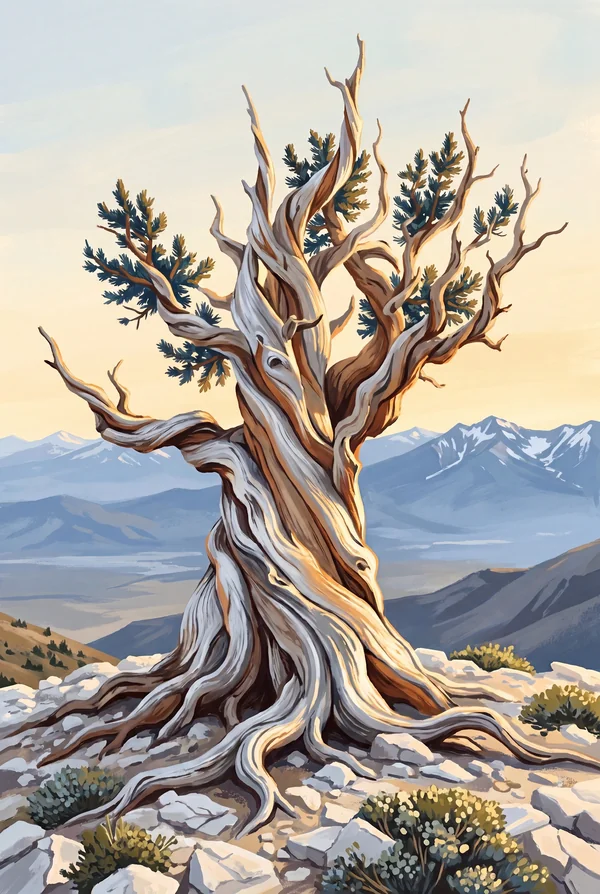
Ancient Bristlecone
The grove below Wheeler Peak, reached by trail from the top of the scenic drive, where trees near 10,000 feet have been alive for thousands of years: polished deadwood spirals, one strip of living bark, needles the tree keeps for decades. The Prometheus stump is here too. Pick it if you want the oldest thing you will ever stand next to.
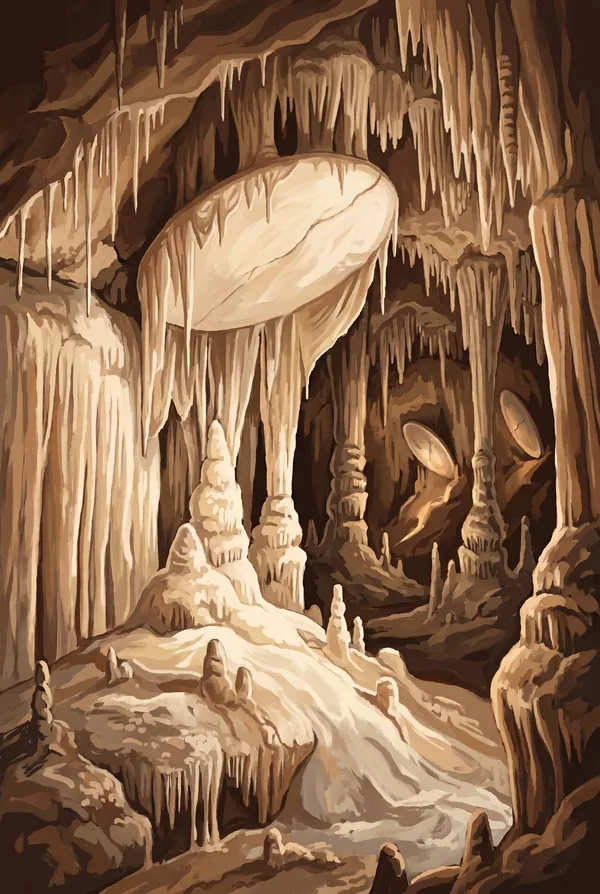
Lehman Caves
The marble cave a rancher opened by candlelight in 1885, protected as a national monument since 1922 and folded into the park in 1986. Its claim to fame is shields: more than 300 of the rare disc-shaped formations, one of the densest concentrations known anywhere, plus the usual gothic inventory of columns, draperies, and popcorn. A constant cool underworld beneath the sagebrush.
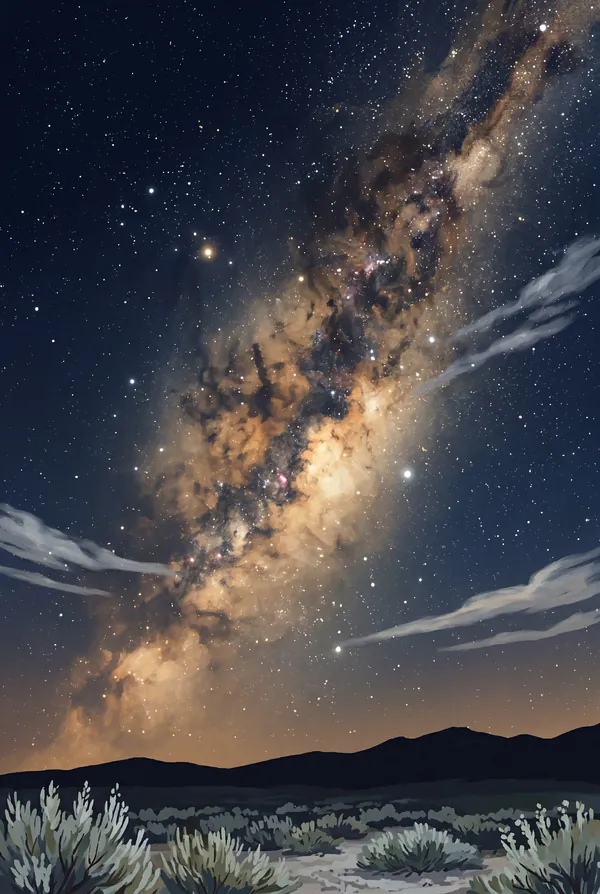
Milky Way Dark Sky
What the park looks like after sunset, which is the reason many people drive here. High elevation, dry air, and enormous distance from any city make this one of the darkest measured night skies in the contiguous United States, an International Dark Sky Park where the Milky Way throws a visible band from horizon to horizon over Wheeler Peak. The stamp for people who stayed up.
How to record your Great Basin visit
Free, and it works whether you are standing there now or remembering a trip from years ago.
1
Check In at the park
Open ParkStamp inside the park boundary and check in. The app confirms you are actually there and logs the date.
2
Or Stamp It later
Already been? Pick the date yourself. Trips from decades ago count the same as last weekend.
3
Or scan your photos
Let ParkStamp read the dates and locations off photos already on your phone. Most people find parks they had forgotten.
Great Basin, asked and answered
Quick answers, for people planning a trip and people remembering one.
When is the best time to visit Great Basin?
Summer and early fall. The high country holds snow well into June, so July through September is the window for Wheeler Peak and the bristlecone grove; late September adds aspen gold along the creeks. Lehman Caves sits around 50 degrees no matter the season. For the night sky, half the reason to come, aim for a moonless week, and remember summit nights are cold at this elevation even in August.
How many days do you need at Great Basin?
One day covers the classics: a cave tour, the drive up Wheeler Peak, and the walk to the bristlecones. A second day earns the summit of Wheeler Peak itself, a high, wind-raked climb best started at dawn ahead of afternoon thunderstorms. Stay the night regardless; leaving before dark means missing one of the darkest skies in the lower 48.
How busy is Great Basin?
Great Basin National Park logged 161,210 visits in 2025, the 54th busiest of the 63 national parks. That makes it one of the quieter national parks, and crowds are rarely the problem.
What does the Great Basin stamp show?
The lead Great Basin design is Ancient Bristlecone. The grove below Wheeler Peak, reached by trail from the top of the scenic drive, where trees near 10,000 feet have been alive for thousands of years: polished deadwood spirals, one strip of living bark, needles the tree keeps for decades. The Prometheus stump is here too. Pick it if you want the oldest thing you will ever stand next to. The other two designs are Lehman Caves and Milky Way Dark Sky.
Is the Great Basin stamp free?
Recording your Great Basin visit is always free: check in at the park, add an old trip, or let the photo scan find it. The full-color art is the paid part, $3.99 one-time with three Great Basin designs to choose from, and the first stamp you collect in ParkStamp is free.
Can I add a Great Basin trip from years ago?
Yes. Open Great Basin in ParkStamp, tap Stamp It, and set the date yourself; a visit from decades ago counts the same as last weekend. If you still have photos from the trip, the photo scan can find and date it from their location tags, without your photos ever leaving your phone.
Do I have to be at Great Basin to get the stamp?
No. Check In is for when you are standing inside Great Basin, and it confirms you are actually there. Stamp It records any past visit on your honor, with your dates. Both are free and put the same stamp in your StampBook.
Start your StampBook with Great Basin
Free on iOS and Android. Your first stamp is on us.