Four and a half million people stand on the South Rim every year, take the same photograph, and drive home with nothing that says they were there. The Grand Canyon stamp is the thing you keep.
Grand Canyon is one of 63 national parks in ParkStamp, and like every park it has original stamp designs drawn in the WPA poster tradition. Not a generic badge with a park name typed across it. Each one is an illustration of a specific place you can go stand.
Recording the visit is free. You can check in at the rim, add a trip you took in 2011, or let the app read the dates off photos already in your camera roll. The stamp art is the part you choose to collect.
The real NPS boundary, with the roads and towns you would actually use to get there.
Grand Canyon, for people who count parks
The things a collector wants to know and the park service doesn't put in one place.
It became a national park on February 26, 1919, and it was not alone that day. Congress signed Grand Canyon and Acadia into existence on the same date, which is why you will see the two of them swap places on every "which park was first" list ever published. Zion followed nine months later, on November 19. Three of the 63 parks were born in 1919, more than any other single year.
Grand Canyon had already been federally protected for eleven years by then. Theodore Roosevelt made it a national monument in 1908 using the Antiquities Act, largely because Congress kept refusing to make it a park. Mining and grazing interests spent those eleven years fighting the upgrade.
It is the fourth busiest national park in the country, with 4,430,653 recorded visits in 2025. Great Smoky Mountains took more than double that. Zion and Yellowstone both edged past it, which surprises people who assume the Grand Canyon is automatically number one. For scale, Kobuk Valley, the least visited of the 63, gets under 8,000 people a year. Grand Canyon does that before lunch on a good weekend in July.
Almost all of those visitors go to the South Rim. The North Rim sits a thousand feet higher, closes for winter, and takes about five hours to drive to from the South Rim even though you can see it across the gap.
Two of these animals exist nowhere else on the planet. One of them will bite you.
California condors. The largest flying bird in North America, with a wingspan up to nine and a half feet, and one of the closest calls in conservation history. By 1982 there were 22 condors left alive on Earth. Every single one was captured for a breeding program. Roughly 73 now fly free over northern Arizona and southern Utah, and the Grand Canyon is the best place in the world to see one. Look for numbered tags on the wings. Every bird is tracked individually, so if you get a decent look you can find out exactly which condor you saw and where it hatched. Lead poisoning from ammunition fragments in carcasses nearly finished them off and is still the single biggest threat to the recovery.
Kaibab squirrels. Charcoal body, bright white tail, absurd tufted ears that grow longer through the winter. They live in a patch of ponderosa pine roughly 20 miles by 40 miles on the North Rim and nowhere else in the world. When the climate warmed after the last ice age, the pine forest retreated uphill onto the Kaibab Plateau and took a population of squirrels with it. The canyon and the surrounding desert did the rest. They have been cut off long enough to become their own thing, and they eat ponderosa seeds and underground truffles to prove it.
Rock squirrels, which are the actual danger. Not mountain lions. Not rattlesnakes. Rangers report squirrel bites at a rate far beyond injuries from any other animal in the park, and more visitors are hospitalized because of them than any other creature here. The cause is always the same: somebody holds out food for a photo. Do not be that person.
Also here: desert bighorn sheep picking their way across ledges that look impossible, elk that have grown far too comfortable in the South Rim parking lots, mule deer, ringtails working the campgrounds after dark, and mountain lions you will almost certainly never see.
The Grand Canyon designs
Pick the one that matches the park you actually saw.
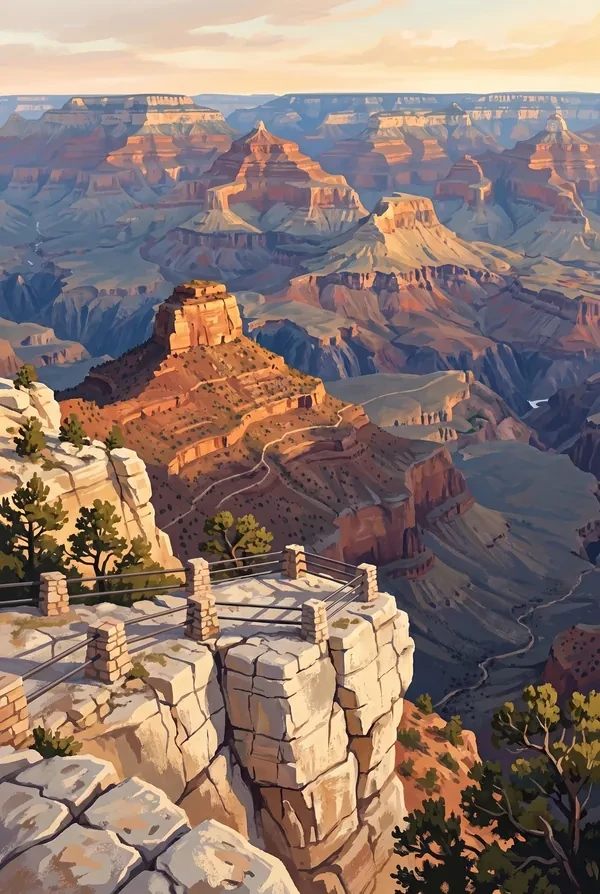
Mather Point
The first look most people ever get. Four steps from the visitor center parking lot and the ground simply stops. Shown at sunrise, when the far wall lights before the floor does.
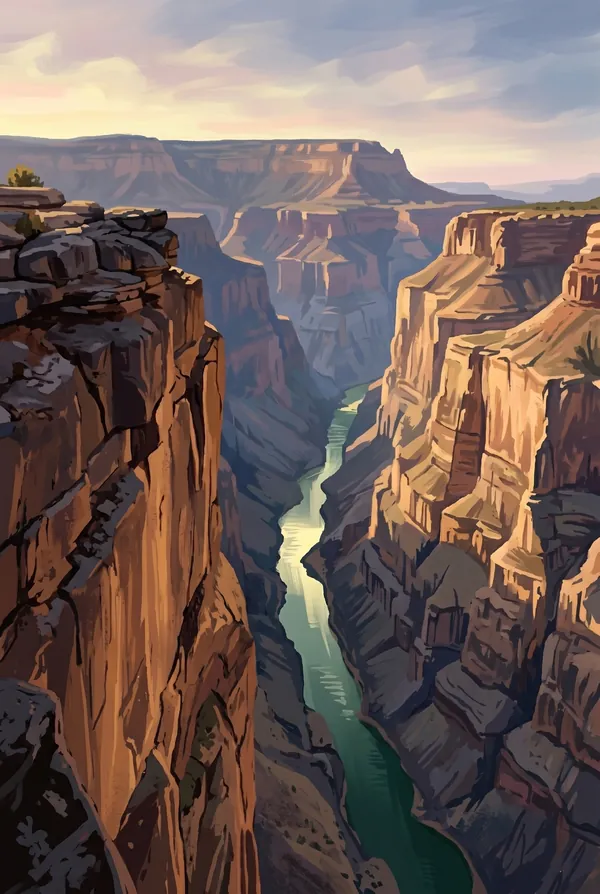
Toroweap Overlook
Three thousand feet of vertical drop straight to the Colorado, sixty miles of dirt road from the nearest pavement. Almost nobody makes it out here. The ones who do never forget it.
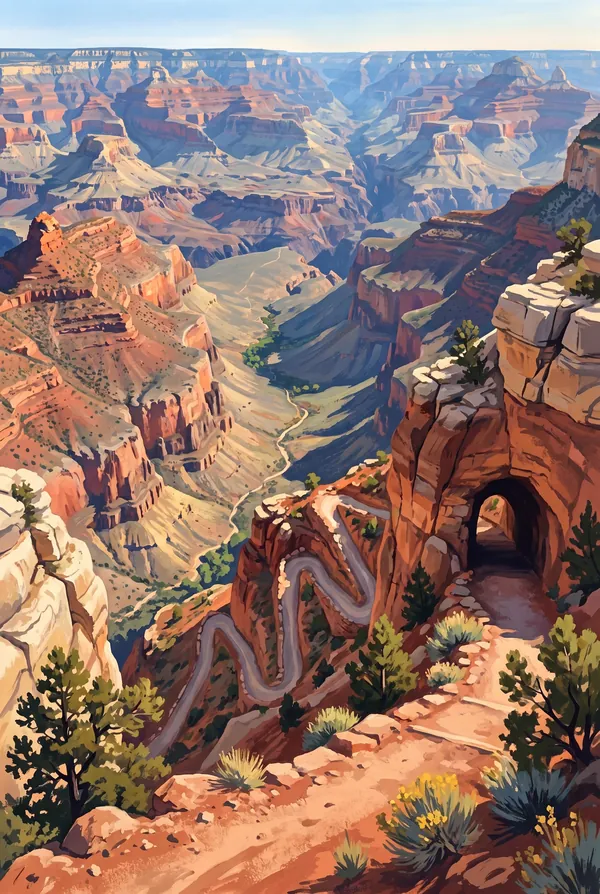
Bright Angel Trail
The canyon from the inside rather than the edge. Switchbacks cut into the redwall, the rim already high above you, and the honest understanding that you have to climb back out.
How to record your Grand Canyon visit
Free, and it works whether you are standing there now or remembering a trip from years ago.
1
Check In at the park
Open ParkStamp inside the park boundary and check in. The app confirms you are actually there and logs the date.
2
Or Stamp It later
Already been? Pick the date yourself. Trips from decades ago count the same as last weekend.
3
Or scan your photos
Let ParkStamp read the dates and locations off photos already on your phone. Most people find parks they had forgotten.
Grand Canyon, asked and answered
Quick answers, for people planning a trip and people remembering one.
When is the best time to visit Grand Canyon?
Spring and fall on the South Rim, when the temperatures below the rim are survivable and the light is at its best. Summer is deceptive: pleasant at 7,000 feet on the rim and dangerous at the river, which can run twenty degrees hotter. The North Rim works on a short summer season, while the South Rim stays open all year, and a snow-dusted canyon at sunrise may be the best look it has.
How many days do you need at Grand Canyon?
One day is enough to be flattened by it, walking the Rim Trail at sunrise and sunset. Two days lets you drop below the rim, down South Kaibab to Cedar Ridge and back, which is a different park entirely. What you do not do is try for the river and back in a day; that is the trip the rangers keep having to rescue.
How busy is Grand Canyon?
Grand Canyon National Park logged 4.43 million visits in 2025, the 4th busiest of the 63 national parks. That makes it one of the busiest parks in the system, and early mornings are the quiet hours.
What does the Grand Canyon stamp show?
The lead Grand Canyon design is Mather Point. The first look most people ever get. Four steps from the visitor center parking lot and the ground simply stops. Shown at sunrise, when the far wall lights before the floor does. The other two designs are Toroweap Overlook and Bright Angel Trail.
Is the Grand Canyon stamp free?
Recording your Grand Canyon visit is always free: check in at the park, add an old trip, or let the photo scan find it. The full-color art is the paid part, $3.99 one-time with three Grand Canyon designs to choose from, and the first stamp you collect in ParkStamp is free.
Can I add a Grand Canyon trip from years ago?
Yes. Open Grand Canyon in ParkStamp, tap Stamp It, and set the date yourself; a visit from decades ago counts the same as last weekend. If you still have photos from the trip, the photo scan can find and date it from their location tags, without your photos ever leaving your phone.
Do I have to be at Grand Canyon to get the stamp?
No. Check In is for when you are standing inside Grand Canyon, and it confirms you are actually there. Stamp It records any past visit on your honor, with your dates. Both are free and put the same stamp in your StampBook.
Start your StampBook with Grand Canyon
Free on iOS and Android. Your first stamp is on us.