In 1968 a retired carpenter named Richard Proenneke flew into this country, built himself a cabin with hand tools, and stayed mostly alone for the next thirty years, filming the whole thing on a tripod. The park that now surrounds his cabin has two active volcanoes, the headwaters of the largest sockeye salmon run on Earth, and not one road in or out.
Lake Clark is one of 63 national parks in ParkStamp, and every park in the app carries original stamp designs in the WPA poster tradition, each one a picture of a specific real place, not a generic mountain.
The record-keeping part is free. Check in when you are in the park, backfill a trip from any year, or let the app read dates and locations from the photos already on your phone.
The real NPS boundary, with the roads and towns you would actually use to get there.
Lake Clark, for people who count parks
One man's cabin, two mountain ranges colliding, and a salmon run written into law.
The Dena'ina were here first, and are still here. Their name for the lake is Qizhjeh Vena, which the Park Service translates as a place where people gathered, and the archaeological record of that gathering runs back thousands of years. Villages like Nondalton still sit at the edge of the park, and subsistence fishing and hunting continue inside it, protected outright by the park's founding law rather than grandfathered in.
Then came the man with the hand tools. Richard Proenneke arrived at Twin Lakes in 1968, in his early fifties, and spent a year building a log cabin using mostly tools whose handles he carved on site, setting up a camera to document the work. He stayed about thirty years, leaving in 1999 at 82. His journals became the book One Man's Wilderness, his footage became the film Alone in the Wilderness, and the cabin, kept as he left it, is now on the National Register of Historic Places. People fly in just to stand in the doorway.
The park came in two steps. Carter protected the area as a national monument in 1978; two years later the Alaska lands act finished the job, drawing a park with a preserve wrapped around it. The preserve designation matters in Alaska: sport hunting continues there while the park core is closed to it. What the boundary encloses is the seam where the Alaska Range runs into the Aleutian Range, a knot of glaciated peaks called the Chigmit Mountains with two steaming volcanoes, Redoubt and Iliamna, standing over Cook Inlet.
Congress put the salmon in the founding purpose. The lake country on the park's west side drains toward Bristol Bay, home of the largest sockeye run on the planet, and protecting the spawning watershed was one of the stated reasons the park exists. It is one of the few parks whose reason-for-being includes a fishery hundreds of miles downstream.
Bears that dig clams, tens of millions of salmon, and a volcano that stopped a 747.
The sockeye come back in the tens of millions. Bristol Bay's run is the largest on Earth, and fish from it climb into the park's lakes to spawn, some of them along the beaches of Lake Clark itself. The run feeds essentially everything: bears, eagles, gulls, lake trout eating the eggs, and the commercial fleet waiting in the bay. Recent seasons have counted returns among the largest ever recorded.
The coastal bears keep banker's hours. On the Cook Inlet coast at Silver Salmon Creek and Chinitna Bay, brown bears graze the sedge meadows like cattle in early summer, dig razor clams out of the tide flats when the water drops, and switch to salmon when the runs arrive. The food is so concentrated that the bears tolerate each other, and people, at distances that would be unthinkable inland.
Redoubt is not decorative. The 10,197-foot volcano erupted in 1989-90 and again in 2009. During the 1989 eruption a fully loaded KLM 747 flew into the ash cloud, lost all four engines, and fell more than two miles before the crew relit them and landed safely in Anchorage. That incident helped rewrite how aviation worldwide treats volcanic ash. The volcano is monitored constantly; from the coast it usually just stands there, white and faintly steaming.
The high country belongs to Dall sheep, white against grey rock in the Chigmits, near the southern edge of their world range, along with wolves, wolverines, lynx and moose in the valleys below. Nothing here is fenced, fed, or managed for viewing. The park is roughly the size of two Yellowstones of country that mostly never sees a boot.
The Lake Clark designs
Pick the one that matches the park you actually saw.
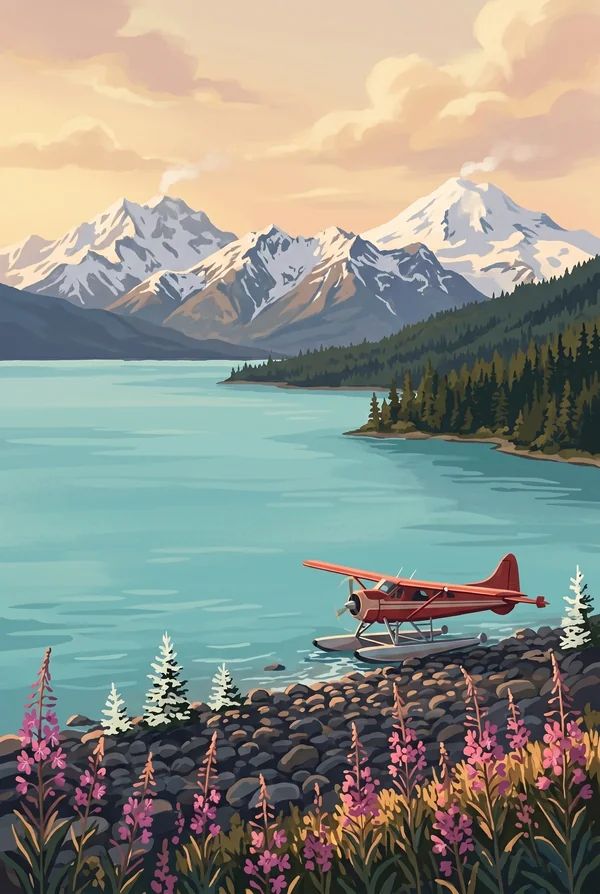
Lake Clark
The park's namesake, some forty miles of glacially fed water the color of oxidized copper, walled by mountains and fringed with spawning beaches that turn red with sockeye in late summer. The Dena'ina name, Qizhjeh Vena, means a place where people gathered, and the villages on its shore say they still do. The quiet, obvious choice.
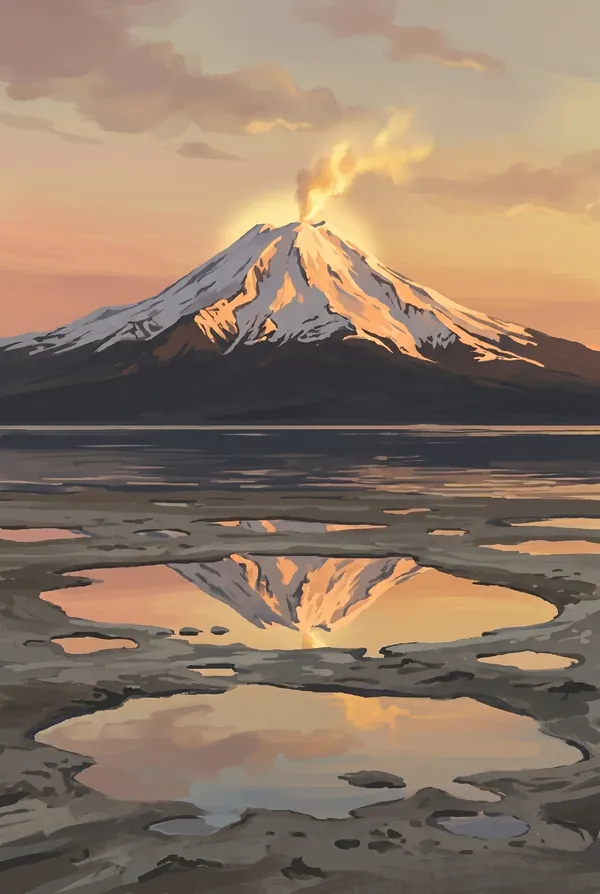
Redoubt Volcano Across Cook Inlet
A 10,197-foot active volcano seen the way most Alaskans actually see it: across the water, white, symmetrical, and faintly steaming. It erupted in 1989-90 (briefly shutting down a 747 mid-flight) and again in 2009. Pick it for the reminder that this park sits on the Pacific Ring of Fire.
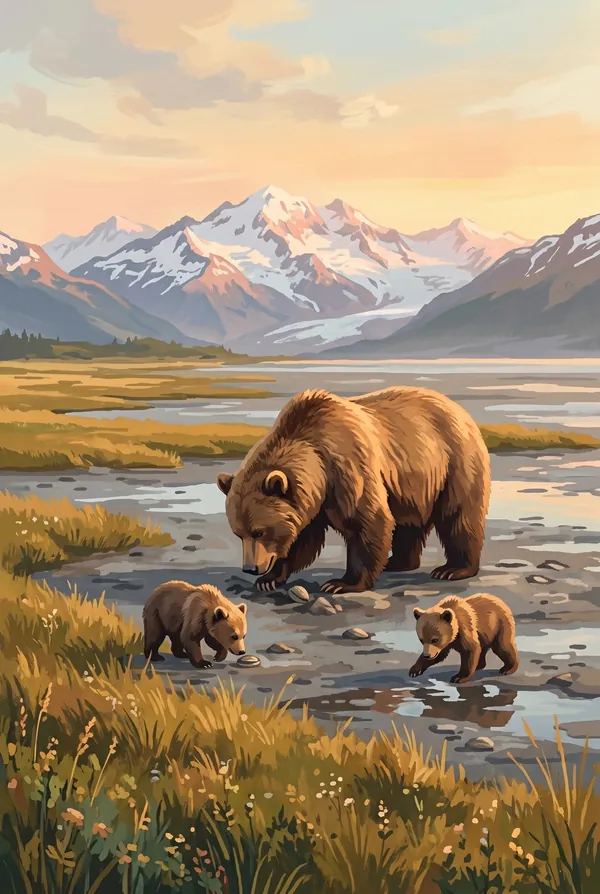
Brown Bears at Silver Salmon Creek
A sedge meadow on the Cook Inlet coast where brown bears graze in June, dig clams at low tide, and chase silver salmon up the creek in late summer, often with cubs in tow and mountains stacked behind. It is some of the most reliable bear viewing in Alaska, and the scene most visitors fly out remembering.
How to record your Lake Clark visit
Free, and it works whether you are standing there now or remembering a trip from years ago.
1
Check In at the park
Open ParkStamp inside the park boundary and check in. The app confirms you are actually there and logs the date.
2
Or Stamp It later
Already been? Pick the date yourself. Trips from decades ago count the same as last weekend.
3
Or scan your photos
Let ParkStamp read the dates and locations off photos already on your phone. Most people find parks they had forgotten.
Lake Clark, asked and answered
Quick answers, for people planning a trip and people remembering one.
When is the best time to visit Lake Clark?
June through early September, with the wildlife setting the schedule. June puts brown bears in the sedge meadows at Silver Salmon Creek with new cubs; July and August bring the sockeye runs that pull bears to the creeks and turn the lake beaches red; late August adds fall color to the tundra and thins the bugs. Winters are long and iced-in, and few services operate then.
How many days do you need at Lake Clark?
A single day works, surprisingly: bear-viewing day trips fly from Anchorage, Homer or Soldotna to the coast and back. Three or four days at a lodge on Lake Clark or the coast is the real visit: bears, fishing, and a flight through Lake Clark Pass. Add a day to fly into Twin Lakes and stand at Proenneke's cabin.
How busy is Lake Clark?
Lake Clark National Park & Preserve logged 19,778 visits in 2025, the 61st busiest of the 63 national parks. That makes it one of the quieter national parks, and crowds are rarely the problem.
What does the Lake Clark stamp show?
The lead Lake Clark design is Lake Clark. The park's namesake, some forty miles of glacially fed water the color of oxidized copper, walled by mountains and fringed with spawning beaches that turn red with sockeye in late summer. The Dena'ina name, Qizhjeh Vena, means a place where people gathered, and the villages on its shore say they still do. The quiet, obvious choice. The other two designs are Redoubt Volcano Across Cook Inlet and Brown Bears at Silver Salmon Creek.
Is the Lake Clark stamp free?
Recording your Lake Clark visit is always free: check in at the park, add an old trip, or let the photo scan find it. The full-color art is the paid part, $3.99 one-time with three Lake Clark designs to choose from, and the first stamp you collect in ParkStamp is free.
Can I add a Lake Clark trip from years ago?
Yes. Open Lake Clark in ParkStamp, tap Stamp It, and set the date yourself; a visit from decades ago counts the same as last weekend. If you still have photos from the trip, the photo scan can find and date it from their location tags, without your photos ever leaving your phone.
Do I have to be at Lake Clark to get the stamp?
No. Check In is for when you are standing inside Lake Clark, and it confirms you are actually there. Stamp It records any past visit on your honor, with your dates. Both are free and put the same stamp in your StampBook.
Start your StampBook with Lake Clark
Free on iOS and Android. Your first stamp is on us.