Katmai is famous for one photograph: a brown bear on a lip of falls, mouth open, salmon in mid-air. But the park exists because of the largest volcanic eruption of the twentieth century, which buried a valley under hundreds of feet of ash in 1912 and which, remarkably, killed no one.
Katmai is one of 63 national parks in ParkStamp. Each park in the app has original stamp art drawn in the WPA poster tradition, and every design illustrates a specific real place you could stand (in this park, usually with a bear guide's advice first).
The visit record itself is free. Check in from the park, backdate a trip from any year, or let the app pull the dates and places from photos already saved on your phone.
The real NPS boundary, with the roads and towns you would actually use to get there.
Katmai, for people who count parks
A park created for a volcano and made famous by bears.
On June 6, 1912, a vent called Novarupta opened near the base of Mount Katmai and erupted for about sixty hours. It was the largest volcanic eruption of the twentieth century, moving roughly thirty times the magma of Mount St. Helens in 1980. On Kodiak, across the strait, ash fell so thickly that at midday a lantern held at arm's length could barely be seen. Ash-fall was reported across the Northern Hemisphere, and the summit of Mount Katmai, six miles from the actual vent, collapsed into a caldera as the magma beneath it drained sideways to Novarupta. Working out that the mountain that fell in was not the mountain that erupted took scientists decades. Because the region was so sparsely settled, and villages evacuated, no one died.
The park exists because of what an expedition found four years later. Robert Griggs, exploring for the National Geographic Society in 1916, crested a pass and looked into a valley floor smoking with thousands of fumaroles where superheated ash lay hundreds of feet deep. He named it the Valley of Ten Thousand Smokes, and the Society's campaign led to Katmai National Monument in 1918, protected as a volcanic laboratory, with the bears an afterthought. The smokes themselves cooled and died within a few decades; the name outlived them.
The bears took over the story from there. The monument grew through the twentieth century, and on December 2, 1980, the Alaska National Interest Lands Conservation Act made it Katmai National Park & Preserve, some four million acres of volcanic coast, lakes and tundra with no road in. What the expansions mostly protected was salmon country: the lakes and rivers feeding Bristol Bay. And salmon country is bear country. Katmai today holds one of the largest protected brown bear populations on Earth, and the bears outnumber the park's year-round human neighbors comfortably.
About 2,000 brown bears, and the salmon run that builds them.
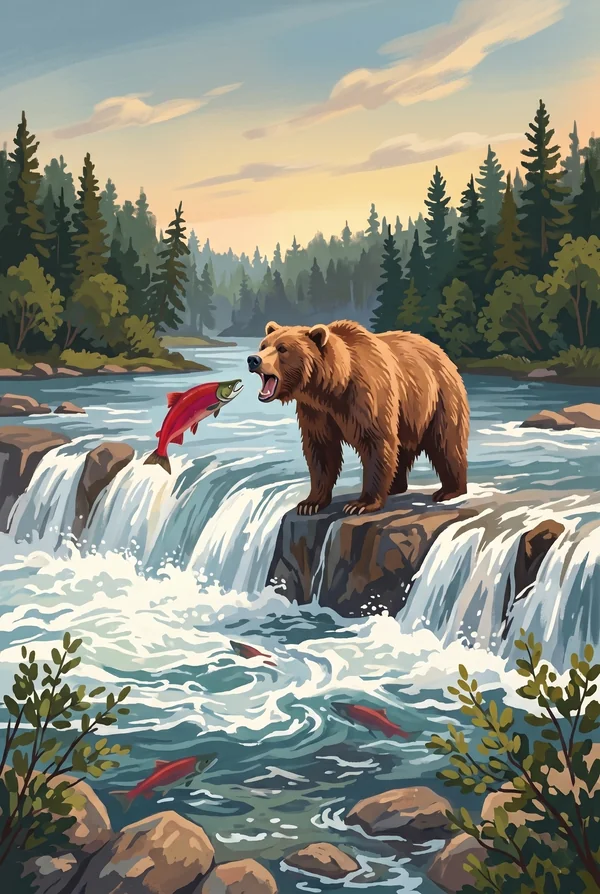
Brooks Falls works because of a six-foot ledge. Sockeye salmon pushing upstream to spawn have to leap it, and in July they stack up below the falls by the thousand. The bears learn positions the way tradesmen learn a job site: the lip, where a standing bear catches fish out of the air; the plunge pool; the shallows below for the ones that misjudge. Individual bears hold and defend the productive spots for years, and the park's viewing platforms let people watch from a few dozen feet away.
The whole show runs on Bristol Bay, whose watershed supports the largest sockeye salmon runs on Earth: tens of millions of fish in a season returning from the ocean to the lakes where they hatched. Katmai's lakes and rivers are the spawning grounds, and the dead and dying fish feed not just bears but eagles, gulls, otters and, through carcasses hauled into the woods, the forest itself.
A brown bear's year is an eating contest with winter, and Katmai's bears are among the biggest anywhere because the salmon let them win it. In late summer a big male can put on hundreds of pounds, entering the fall visibly changed. Since 2014 the park has run Fat Bear Week, an online bracket where the public votes on which bear best achieved autumn roundness, a joke with a serious point, since the fat is exactly what survival looks like.
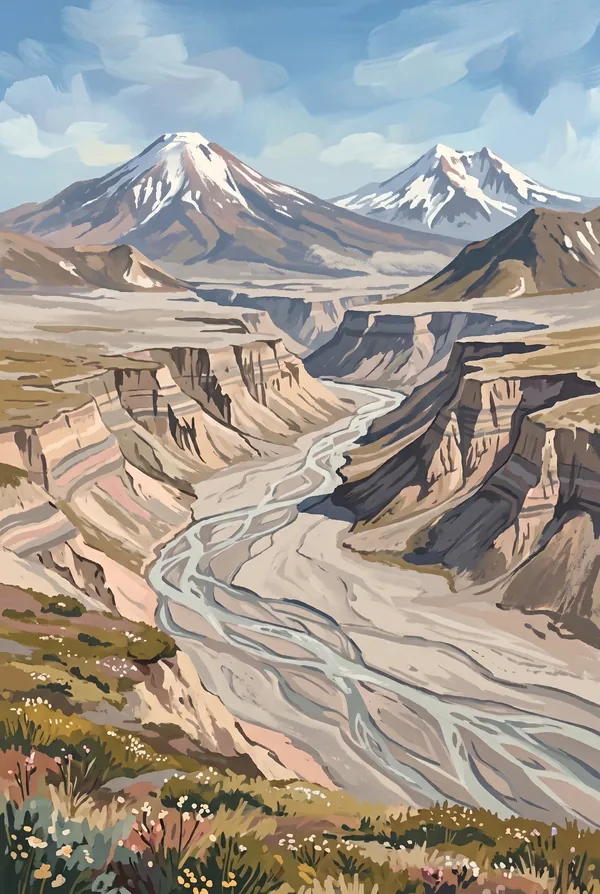
The volcano country is habitat too, in a stranger way. The Valley of Ten Thousand Smokes is still mostly bare, a pale plain of welded ash cut by rivers into sheer gorges, with plants working the edges a century on. In the mid-1960s NASA sent Apollo astronauts to train on it, on the theory that it was as close to the Moon as the Earth offered.
The Katmai designs
Pick the one that matches the park you actually saw.
Brooks Falls Bear Catching Salmon
The most famous wildlife scene in the park system: a brown bear on the lip of a six-foot falls, jaws open toward a sockeye in mid-leap. It happens every July when the run arrives and the bears take up their stations. If you have stood on the platform and heard a fish hit a mouth, this is the stamp.
Valley of Ten Thousand Smokes
The ash-flow plain left by the 1912 eruption: hundreds of feet deep in places, cut into gorges by the rivers, still nearly bare after a century. The thousands of fumaroles that named it went out generations ago, which makes the valley a monument to its own violence. Apollo astronauts trained here because it was the closest thing to the Moon available.
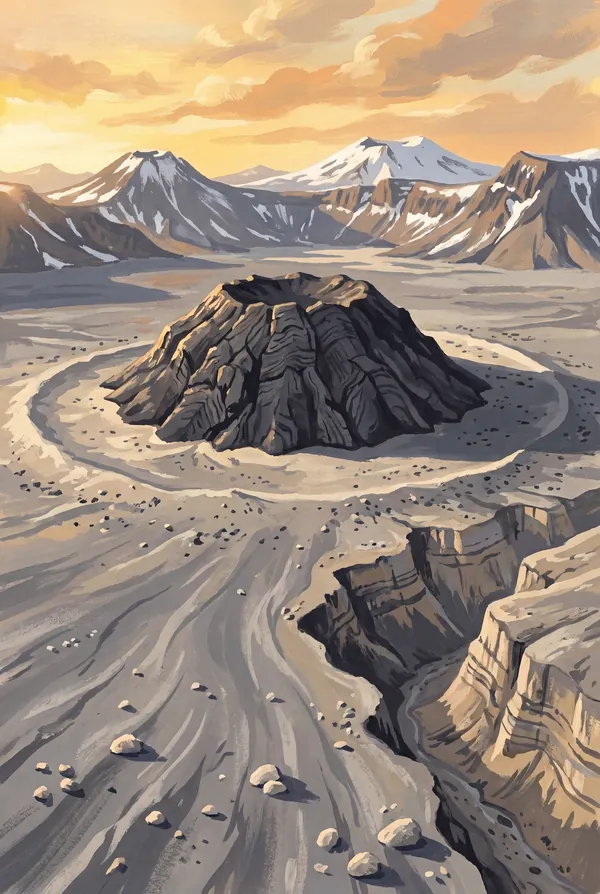
Novarupta Volcano
The vent itself: a squat gray dome of lava, roughly a quarter mile across, that plugged the opening after the largest eruption of the twentieth century. Mount Katmai, miles away, lost its summit taking the blame. Choosing Novarupta as your stamp is choosing the correct answer to a question most people get wrong.
How to record your Katmai visit
Free, and it works whether you are standing there now or remembering a trip from years ago.
1
Check In at the park
Open ParkStamp inside the park boundary and check in. The app confirms you are actually there and logs the date.
2
Or Stamp It later
Already been? Pick the date yourself. Trips from decades ago count the same as last weekend.
3
Or scan your photos
Let ParkStamp read the dates and locations off photos already on your phone. Most people find parks they had forgotten.
Katmai, asked and answered
Quick answers, for people planning a trip and people remembering one.
When is the best time to visit Katmai?
July is the famous month, when the sockeye run hits Brooks Falls and the bears take up their fishing stations. September is the connoisseur's pick: fewer people, fall color on the tundra, and heavy, round bears working the spawned-out streams before denning. June is quieter for bears but good for the Valley of Ten Thousand Smokes. Everything rides on floatplane weather, so build in slack.
How many days do you need at Katmai?
A day trip by floatplane to Brooks Camp is genuinely worth it and is how many visitors come. Two or three days is better: bears at different water levels and light, plus the bus tour out to the Valley of Ten Thousand Smokes, which deserves a day of its own. Backcountry trips into the volcanic country or along the coast are expedition planning, not a schedule item.
How busy is Katmai?
Katmai National Park & Preserve logged 34,479 visits in 2025, the 59th busiest of the 63 national parks. That makes it one of the quieter national parks, and crowds are rarely the problem.
What does the Katmai stamp show?
The lead Katmai design is Brooks Falls Bear Catching Salmon. The most famous wildlife scene in the park system: a brown bear on the lip of a six-foot falls, jaws open toward a sockeye in mid-leap. It happens every July when the run arrives and the bears take up their stations. If you have stood on the platform and heard a fish hit a mouth, this is the stamp. The other two designs are Valley of Ten Thousand Smokes and Novarupta Volcano.
Is the Katmai stamp free?
Recording your Katmai visit is always free: check in at the park, add an old trip, or let the photo scan find it. The full-color art is the paid part, $3.99 one-time with three Katmai designs to choose from, and the first stamp you collect in ParkStamp is free.
Can I add a Katmai trip from years ago?
Yes. Open Katmai in ParkStamp, tap Stamp It, and set the date yourself; a visit from decades ago counts the same as last weekend. If you still have photos from the trip, the photo scan can find and date it from their location tags, without your photos ever leaving your phone.
Do I have to be at Katmai to get the stamp?
No. Check In is for when you are standing inside Katmai, and it confirms you are actually there. Stamp It records any past visit on your honor, with your dates. Both are free and put the same stamp in your StampBook.
Start your StampBook with Katmai
Free on iOS and Android. Your first stamp is on us.