Roughly three-fifths of the island of St. John is national park, and the park exists because Laurance Rockefeller quietly bought about five thousand acres of it and gave them to the country. The country itself had bought the islands from Denmark in 1917, for $25 million in gold, mostly out of wartime nerves about German submarines.
Virgin Islands is one of the 63 national parks in ParkStamp, and every one of them has original stamp designs in the WPA poster tradition. Each is an illustration of a specific real place, in this case places you may need a boat, a trail, or a snorkel to reach.
Recording the visit costs nothing. Check in on the island, log the trip you took years ago, or let the app lift the dates and places from the photos already on your phone.
The real NPS boundary, with the roads and towns you would actually use to get there.
Virgin Islands, for people who count parks
Sugar, rebellion, abandonment, and then a philanthropist with a yacht.
Denmark ran St. John as a sugar island, colonizing it in 1718 and covering its steep slopes with plantations worked by enslaved Africans. In November 1733, enslaved people, many of them Akwamu from the Gold Coast, seized the Danish fort at Coral Bay and held much of the island for about six months, one of the earliest and longest slave rebellions in the Americas, until troops brought from French Martinique ended it. Denmark abolished slavery in its West Indies in 1848, after an uprising on St. Croix forced the governor's hand.
Sugar collapsed and the island went back to bush. By the twentieth century the estates were ruins in dry forest, and in 1917 Denmark sold the islands to the United States for $25 million in gold; Washington's concern was German U-boat bases in the Caribbean, not beaches. For decades afterward St. John stayed poor, quiet and hard to reach, which is precisely what preserved it.
Laurance Rockefeller sailed through in the early 1950s and did what his family had already done at Acadia and Grand Teton: bought land at scale, about 5,000 acres through the family's Jackson Hole Preserve, and offered it to the federal government on condition it become a national park. Eisenhower signed the act on August 2, 1956. Congress later pushed the park offshore, adding thousands of acres of submerged reef and seagrass in 1962, and Hassel Island in St. Thomas harbor in 1978, so the park now runs well past the waterline in every direction.
A park that is half underwater, on an island with no native land mammals but bats.
The reef is the other half of the park. Elkhorn and staghorn corals, both federally listed as threatened since 2006, build the shallow structure, with seagrass meadows behind the reefs where green sea turtles graze; hawksbills work the coral itself. The mangrove-lined pockets of Hurricane Hole, where boats have always sheltered from storms, turn out to shelter corals too, growing in the shade of the mangrove roots.
The only native land mammals are bats. Everything else walking the island was brought: donkeys from the plantation era now wander at will, and the mongoose, imported to kill rats in the cane fields, mostly failed at the job (rats work nights and the mongoose works days) while making life miserable for ground-nesting birds and turtle nests ever since.
The forest is a comeback, not a relic. Nearly the whole island was cleared for cane and pasture, so today's green slopes are second growth threaded with ruins. In September 2017 hurricanes Irma and Maria, both Category 5, crossed the islands two weeks apart and stripped the canopy bare; the speed of the regreening since has been its own lesson in what this vegetation is built for.
The Virgin Islands designs
Pick the one that matches the park you actually saw.
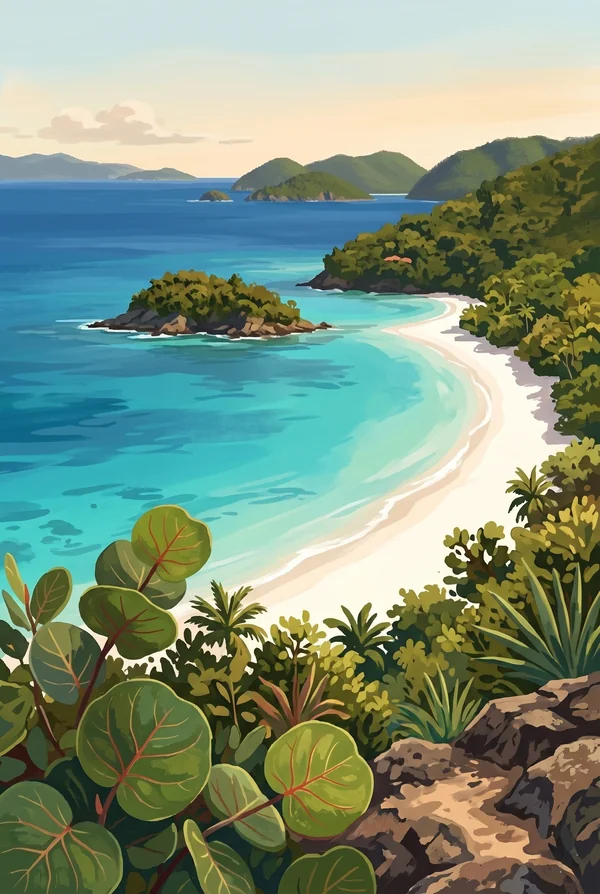
Trunk Bay Beach
The postcard of the Caribbean: white sand, a green islet just offshore, and water in bands of blue, with a marked underwater trail along the reef for snorkelers. The name likely honors the leatherback, the "trunk turtle" of island usage. It appears on lists of the world's best beaches often enough that arguing feels pointless.
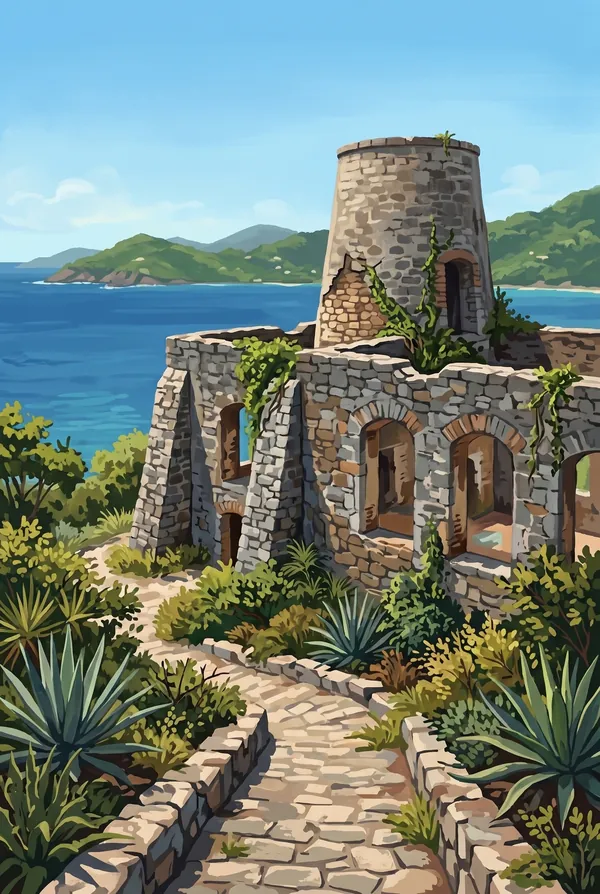
Annaberg Sugar Mill Ruins
The stone and coral-rubble remains of a plantation built and worked by enslaved laborers: a windmill tower among the largest in the Virgin Islands, boiling rooms, and village foundations, looking across the water to Tortola. It is the park's most direct monument to the people whose forced labor made the island's first economy.
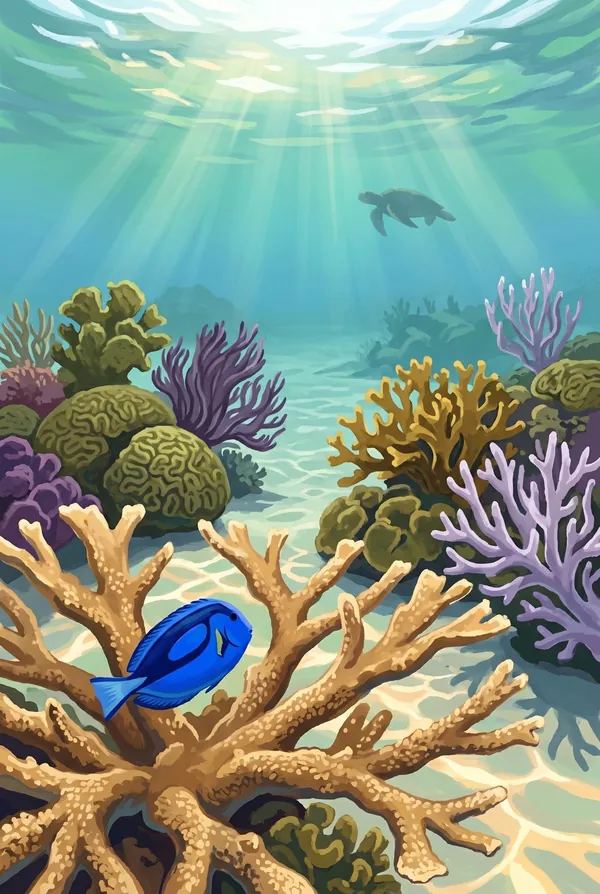
Underwater Coral Reef
The park extends far past the beach: thousands of submerged acres of reef and seagrass were added in 1962, decades before marine protection was fashionable. Elkhorn coral, parrotfish, rays and turtles live on the park map as surely as any overlook. A stamp for the visitor whose best memories of St. John happened underwater.
How to record your Virgin Islands visit
Free, and it works whether you are standing there now or remembering a trip from years ago.
1
Check In at the park
Open ParkStamp inside the park boundary and check in. The app confirms you are actually there and logs the date.
2
Or Stamp It later
Already been? Pick the date yourself. Trips from decades ago count the same as last weekend.
3
Or scan your photos
Let ParkStamp read the dates and locations off photos already on your phone. Most people find parks they had forgotten.
Virgin Islands, asked and answered
Quick answers, for people planning a trip and people remembering one.
When is the best time to visit Virgin Islands?
December through April is the classic dry season: reliable trade winds, calm mornings for snorkeling, and the whole island green from autumn rain. The water stays swimmable all year. Summer is hotter, stiller and much quieter, with the best underwater visibility on calm days; late summer and fall are the heart of hurricane season, which the ruins at Annaberg and the mangroves at Hurricane Hole have both been negotiating for centuries.
How many days do you need at Virgin Islands?
Three days suits the pace of the place. One for the north shore: Trunk Bay's underwater trail, Cinnamon and Maho for turtles over the seagrass. One for history: Annaberg's mill, then the Reef Bay trail down past petroglyphs and ruined estates. One on or in the water around Hurricane Hole and the east end, which is where the park's underwater half stops being an abstraction.
How busy is Virgin Islands?
Virgin Islands National Park logged 471,074 visits in 2025, the 42nd busiest of the 63 national parks. That makes it one of the quieter national parks, and crowds are rarely the problem.
What does the Virgin Islands stamp show?
The lead Virgin Islands design is Trunk Bay Beach. The postcard of the Caribbean: white sand, a green islet just offshore, and water in bands of blue, with a marked underwater trail along the reef for snorkelers. The name likely honors the leatherback, the "trunk turtle" of island usage. It appears on lists of the world's best beaches often enough that arguing feels pointless. The other two designs are Annaberg Sugar Mill Ruins and Underwater Coral Reef.
Is the Virgin Islands stamp free?
Recording your Virgin Islands visit is always free: check in at the park, add an old trip, or let the photo scan find it. The full-color art is the paid part, $3.99 one-time with three Virgin Islands designs to choose from, and the first stamp you collect in ParkStamp is free.
Can I add a Virgin Islands trip from years ago?
Yes. Open Virgin Islands in ParkStamp, tap Stamp It, and set the date yourself; a visit from decades ago counts the same as last weekend. If you still have photos from the trip, the photo scan can find and date it from their location tags, without your photos ever leaving your phone.
Do I have to be at Virgin Islands to get the stamp?
No. Check In is for when you are standing inside Virgin Islands, and it confirms you are actually there. Stamp It records any past visit on your honor, with your dates. Both are free and put the same stamp in your StampBook.
Start your StampBook with Virgin Islands
Free on iOS and Android. Your first stamp is on us.