It is the busiest national park in America by a factor of two, and the only one of the 63 you can drive into without paying a cent. Both of those facts come from the same strange piece of history.
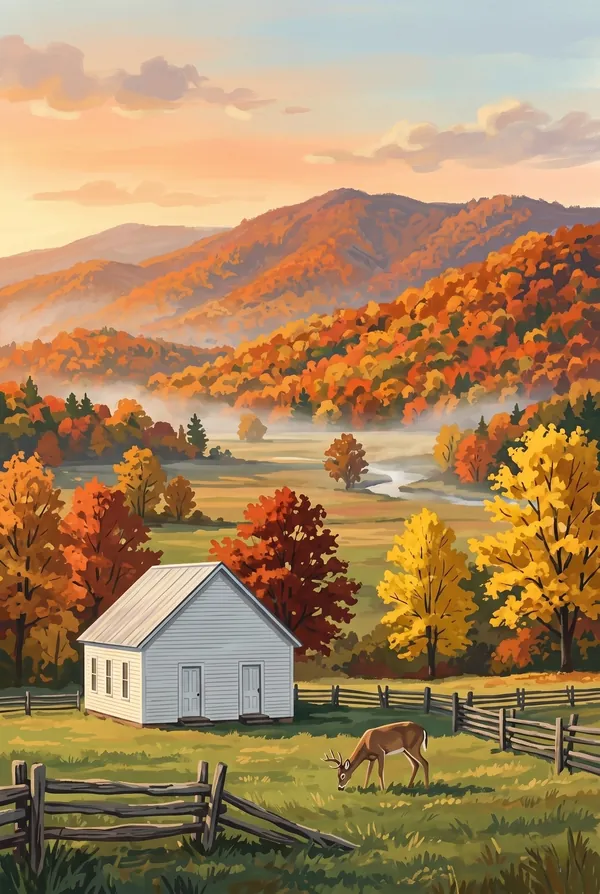
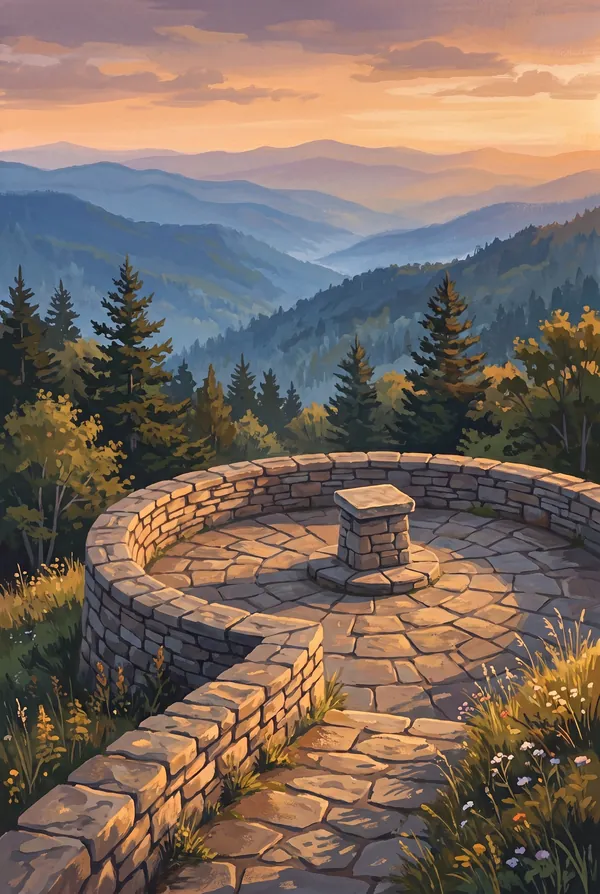
Great Smoky Mountains is one of 63 national parks in ParkStamp, and like every park it has original stamp designs drawn in the WPA poster tradition. Each one is an illustration of a specific place you can go stand.
Recording the visit is free. Check in at the park, add a trip you took years ago, or let the app read the dates off photos already in your camera roll.
The real NPS boundary, with the roads and towns you would actually use to get there.
Great Smoky Mountains, for people who count parks
A park nobody paid for, on land nobody wanted to sell.
Congress authorized this park and then refused to buy it. The 1926 act that created Great Smoky Mountains states outright that the government "shall not purchase by appropriation of public moneys any land" inside it. The land had to be donated. Tennessee and North Carolina each put up $2 million in bonds. Schoolchildren collected pennies. It still was not enough.
John D. Rockefeller Jr. closed the gap with $5 million in 1928, given through a memorial fund named for his late wife. A 1931 settlement with a single timber company holding nearly 100,000 acres finally made the park possible, and it was chartered on June 15, 1934. The land came from roughly 6,000 separate owners, and assembling it meant removing the people living on it. Accounts differ on how many: some sources say more than 1,200 families, others put it above 4,000 residents.
A handful negotiated lifetime leases instead. Seven unmarried sisters on a 122-acre homestead in Little Greenbrier Cove took $4,750 and the right to stay. The last of them died in 1966. Their cabin is still standing.
You do not pay to enter, and the reason is a 1951 deed. When Tennessee handed over the two main roads through the park, it attached a restriction barring tolls on either one. A 1964 federal law prevents the Park Service from charging entrance fees where a primary park road cannot be tolled. So the busiest park in the country is legally unable to sell you a ticket. Since 2023 it does sell daily parking tags, which is a charge on your car rather than on you; the current details live on nps.gov.
It logged 11,527,939 visits in 2025. That is more than double Zion, the second busiest. Being free helps. Sitting on the highway between Gatlinburg and Cherokee, within a day's drive of a very large share of the country, helps more.
The salamander capital of the world, and it is not a figure of speech.
Salamanders. Thirty-one species across five families, which UNESCO cites as the greatest diversity of salamanders anywhere on Earth. Most of them are lungless and breathe through their skin. Two exist essentially nowhere else: Jordan's salamander, whose entire global range is this park and its immediate surroundings, and the Cherokee black-bellied salamander, described only recently. The Park Service notes that on any given day salamanders make up the majority of the vertebrate biomass in the park. There is more salamander here than bear, deer and elk combined.
Synchronous fireflies. For about two weeks in late May and early June, the males of one species flash in unison. Five to eight flashes, then roughly eight seconds of total darkness, then again, thousands of them at once. The leading explanation is that the synchronized blackout is what lets a male see a female's dimmer answering signal without interference. Demand got severe enough that viewing is now a lottery. They are not unique to the Smokies, despite what you will read; the species ranges from Georgia to New York. Elkmont is simply the best show.
Black bears, at roughly two per square mile. About 1,900 of them, which the Park Service calls the densest black bear population in North America. Stay 50 yards back; it is the law, not a suggestion. The animals that get into human food are the ones that end up having to be killed.
Elk, back after two centuries. Hunted out of North Carolina by the late 1700s and Tennessee by the mid-1800s. Twenty-five were released into Cataloochee Valley in 2001 and 27 more the following year. Around 150 now spend part of the year in the park, all on the North Carolina side. Red wolves were tried too, in the 1990s, and failed.
The Great Smoky Mountains designs
Pick the one that matches the park you actually saw.
Kuwohi
The highest point in the park, in Tennessee, and on the entire 2,190-mile Appalachian Trail, at about 6,643 feet. It carried the name Clingmans Dome until September 2024, when the US Board on Geographic Names restored the Cherokee name at the request of the Eastern Band. Kuwohi means "mulberry place" and is the highest point in the Cherokee homeland.
Cades Cove
A flat green valley ringed by mountains, and the single most visited spot in the park. Geologically it is a window: erosion stripped the hard rock above and exposed softer limestone, which made deep soil, which drew farmers. An eleven-mile one-way loop passes three churches, a working gristmill and a dozen preserved homesteads.
Newfound Gap
The lowest drivable pass across the crest, at about 5,046 feet, and the place the state line runs straight through the parking lot. The name is literal: an 1872 survey found it was lower than the gap everyone had been using. Roosevelt dedicated the park from this spot in 1940, standing on a platform straddling both states.
How to record your Great Smoky Mountains visit
Free, and it works whether you are standing there now or remembering a trip from years ago.
1
Check In at the park
Open ParkStamp inside the park boundary and check in. The app confirms you are actually there and logs the date.
2
Or Stamp It later
Already been? Pick the date yourself. Trips from decades ago count the same as last weekend.
3
Or scan your photos
Let ParkStamp read the dates and locations off photos already on your phone. Most people find parks they had forgotten.
Great Smoky Mountains, asked and answered
Quick answers, for people planning a trip and people remembering one.
When is the best time to visit Great Smoky Mountains?
October, and everyone knows it: the hardwood forest turns all at once and the ridges go rust and gold for weeks, which is also why fall weekends jam. Early summer brings the synchronous fireflies at Elkmont and soft, hazy evenings. Winter is the sleeper season, when the crowds thin out and a weekday morning in Cades Cove can feel like a private park.
How many days do you need at Great Smoky Mountains?
Two full days covers the classics: Cades Cove and its bears one day, Newfound Gap Road over the crest and a waterfall walk the next. Add a third to earn a view on foot, because the best of the Smokies, Charlies Bunion or the Chimney Tops, is reached by trail, not pullout.
How busy is Great Smoky Mountains?
Great Smoky Mountains National Park logged 11.53 million visits in 2025, the 1st busiest of the 63 national parks. That makes it one of the busiest parks in the system, and early mornings are the quiet hours.
What does the Great Smoky Mountains stamp show?
The lead Great Smoky Mountains design is Clingmans Dome (Kuwohi). The highest point in the park, in Tennessee, and on the entire 2,190-mile Appalachian Trail, at about 6,643 feet. It carried the name Clingmans Dome until September 2024, when the US Board on Geographic Names restored the Cherokee name at the request of the Eastern Band. Kuwohi means "mulberry place" and is the highest point in the Cherokee homeland. The other two designs are Cades Cove and Newfound Gap.
Is the Great Smoky Mountains stamp free?
Recording your Great Smoky Mountains visit is always free: check in at the park, add an old trip, or let the photo scan find it. The full-color art is the paid part, $3.99 one-time with three Great Smoky Mountains designs to choose from, and the first stamp you collect in ParkStamp is free.
Can I add a Great Smoky Mountains trip from years ago?
Yes. Open Great Smoky Mountains in ParkStamp, tap Stamp It, and set the date yourself; a visit from decades ago counts the same as last weekend. If you still have photos from the trip, the photo scan can find and date it from their location tags, without your photos ever leaving your phone.
Do I have to be at Great Smoky Mountains to get the stamp?
No. Check In is for when you are standing inside Great Smoky Mountains, and it confirms you are actually there. Stamp It records any past visit on your honor, with your dates. Both are free and put the same stamp in your StampBook.
Start your StampBook with Great Smoky Mountains
Free on iOS and Android. Your first stamp is on us.