The western parks were carved out of land the government already owned. Shenandoah was assembled the hard way, from thousands of privately held mountain tracts, and close to five hundred families were moved out to make it. What they left behind has grown back into ninety-some miles of forested ridge an easy drive from Washington.
Shenandoah is one of the 63 national parks in ParkStamp. Every park in the app has original stamp designs in the WPA poster tradition (fitting here, since the CCC boys of that same era built half of what you see), and each design shows a specific real place.
Recording a visit is free. Check in from an overlook, add the trip you took years ago, or let the app find the dates and places in the photos already on your phone.
The real NPS boundary, with the roads and towns you would actually use to get there.
Shenandoah, for people who count parks
A park made from used land, and honest about it.
Congress authorized it in 1926 but refused to buy an acre. The eastern parks were expected to be donated, so Virginia raised money, took thousands of tracts under a blanket condemnation law the courts upheld, and handed the deeds to the federal government. The park was established on December 26, 1935, when the Interior Department accepted them, and Franklin Roosevelt dedicated it at Big Meadows on July 3, 1936.
The cost fell on the people who lived there. Close to five hundred families were displaced from the hollows: some resettled nearby with federal help, some evicted, a few granted permission to remain for life, with the last of the lifetime residents living in the park into the 1970s. Their cemeteries, chimneys and stone walls are still scattered through the woods, and the park now presents that history plainly rather than pretending the mountains were empty.
This was a Civilian Conservation Corps showcase. Some of the first CCC camps in any national park went in here in 1933, and the corps spent nearly a decade building overlooks, trails, lodges and stonework along the new Skyline Drive. The park also carries a harder piece of that era's record: its facilities were segregated at first, with one area, Lewis Mountain, designated for Black visitors, and full desegregation came only around 1950.
The land itself is a recovery. By the 1930s these mountains had been logged, farmed, grazed and then stripped of their dominant tree when the chestnut blight killed the American chestnut. Nearly everything you see from the Drive has grown back since, and about two-fifths of the park is now designated wilderness: used land gone wild again, which is the real argument Shenandoah makes.
One of the densest black bear populations anywhere, and a salamander with three mountains to its name.
Black bears came back on their own. When the park was established they were essentially gone from these ridges; the regrown oak forest, heavy with acorns, now supports one of the densest black bear populations in the country. Seeing one cross Skyline Drive is a routine event by park standards, which would have astonished anyone here in 1935.
The Shenandoah salamander lives nowhere else on Earth. It survives only on a few cool, north-facing talus slopes on three of the park's highest peaks, squeezed there by its wider-ranging cousin, the red-backed salamander, which outcompetes it everywhere the rocks are less harsh. Federally listed as endangered, its entire global range would fit inside a small farm, and a warming climate shrinks the cool end of the mountain it depends on.
Brook trout hold the headwaters. The only trout native to these mountains persists in dozens of cold streams falling off both sides of the ridge, and the park is one of their strongholds in the mid-Atlantic. In fall, the ridge line itself becomes a flyway: broad-winged hawks and other raptors stream south along the Blue Ridge, riding the updrafts past the overlooks.
The Shenandoah designs
Pick the one that matches the park you actually saw.
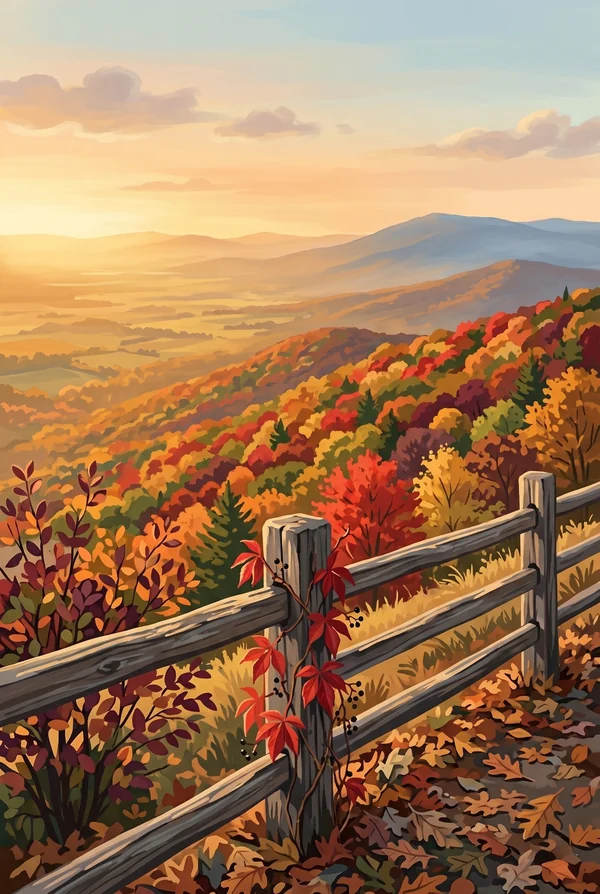
Skyline Drive Fall Color
The park's spine: 105 miles of ridgetop road with some 75 overlooks, built through the 1930s and now a historic district in its own right. In October the color starts on the summits and pours downslope for weeks, and the Drive lets you follow it at 35 miles an hour. The obvious stamp, and honestly earned.
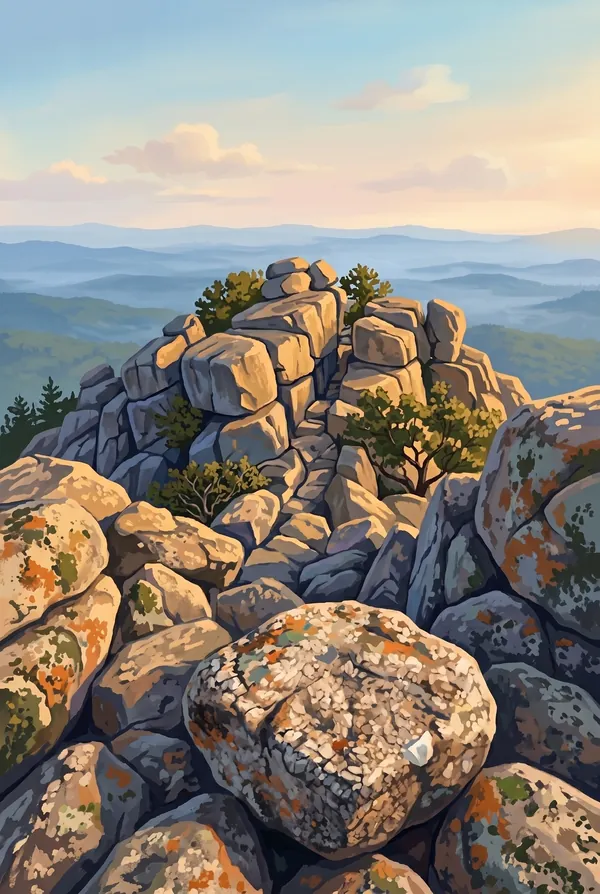
Old Rag Granite Scramble
Old Rag's bare summit ridge is a billion-year-old granite spine where the trail gives up on walking and sends you through crevices, under boulders, and over slabs on your hands. It is widely held to be the best rock scramble in the mid-Atlantic and has been an obsession of Virginia hikers for generations.
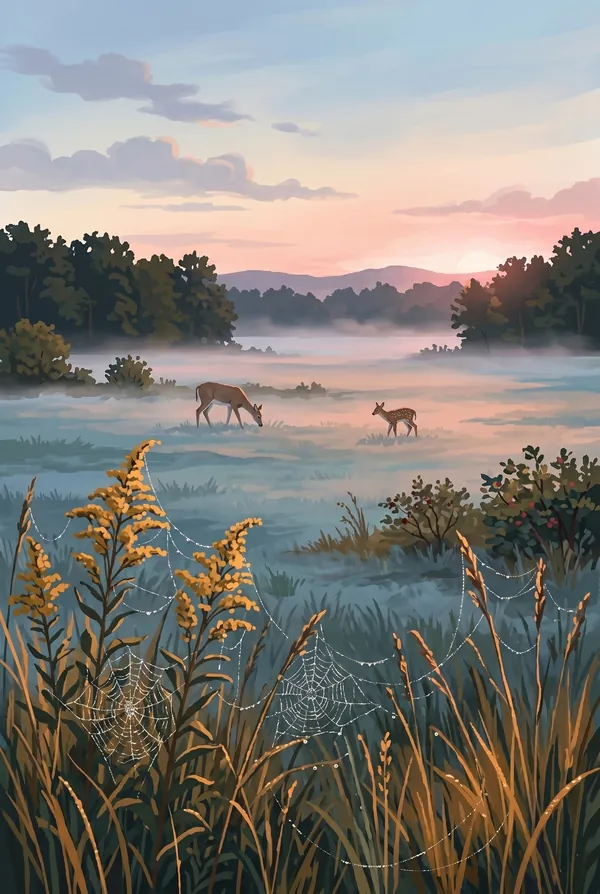
Big Meadows
A broad, open expanse near the crest of the Blue Ridge, kept open on purpose though no one is certain what first made it: fire, grazing and native burning all have their advocates. Roosevelt dedicated the park here in 1936. Deer graze it at dusk, berries fill it in summer, and it has the darkest night sky on the ridge.
How to record your Shenandoah visit
Free, and it works whether you are standing there now or remembering a trip from years ago.
1
Check In at the park
Open ParkStamp inside the park boundary and check in. The app confirms you are actually there and logs the date.
2
Or Stamp It later
Already been? Pick the date yourself. Trips from decades ago count the same as last weekend.
3
Or scan your photos
Let ParkStamp read the dates and locations off photos already on your phone. Most people find parks they had forgotten.
Shenandoah, asked and answered
Quick answers, for people planning a trip and people remembering one.
When is the best time to visit Shenandoah?
October, and everyone knows it: color runs down the mountainsides for most of the month, peaking at the summits first, and weekends on Skyline Drive move at a crawl. For the same park without the traffic: June for mountain laurel and black bear sightings, spring for waterfalls and wildflowers filling the hollows, and deep winter for bare-tree views into both valleys that no summer visitor ever gets.
How many days do you need at Shenandoah?
One long day drives all 105 miles of Skyline Drive with overlook stops and a leg-stretcher like Stony Man or Dark Hollow Falls. Two days is the honest number: it buys either the Old Rag scramble (a full day by itself) or a real waterfall hike in Whiteoak Canyon, plus an evening at Big Meadows watching the deer come out.
How busy is Shenandoah?
Shenandoah National Park logged 1.68 million visits in 2025, the 19th busiest of the 63 national parks. That puts it in the middle of the pack: busy at the famous spots, quiet a mile past them.
What does the Shenandoah stamp show?
The lead Shenandoah design is Skyline Drive Fall Color. The park's spine: 105 miles of ridgetop road with some 75 overlooks, built through the 1930s and now a historic district in its own right. In October the color starts on the summits and pours downslope for weeks, and the Drive lets you follow it at 35 miles an hour. The obvious stamp, and honestly earned. The other two designs are Old Rag Granite Scramble and Big Meadows.
Is the Shenandoah stamp free?
Recording your Shenandoah visit is always free: check in at the park, add an old trip, or let the photo scan find it. The full-color art is the paid part, $3.99 one-time with three Shenandoah designs to choose from, and the first stamp you collect in ParkStamp is free.
Can I add a Shenandoah trip from years ago?
Yes. Open Shenandoah in ParkStamp, tap Stamp It, and set the date yourself; a visit from decades ago counts the same as last weekend. If you still have photos from the trip, the photo scan can find and date it from their location tags, without your photos ever leaving your phone.
Do I have to be at Shenandoah to get the stamp?
No. Check In is for when you are standing inside Shenandoah, and it confirms you are actually there. Stamp It records any past visit on your honor, with your dates. Both are free and put the same stamp in your StampBook.
Start your StampBook with Shenandoah
Free on iOS and Android. Your first stamp is on us.