In 1881 two brothers followed a whistling sound to a hole in the prairie about ten by fourteen inches across, and the wind coming out of it knocked a hat off. That hole is still the only natural opening ever found into a cave that now measures 168 surveyed miles, one of the longest on Earth. In 1903 it became the first cave anywhere to be made a national park.
Wind Cave is one of the 63 national parks in ParkStamp, and each park carries original stamp designs in the WPA poster tradition: every one an illustration of an actual place in the park you can go see for yourself.
Logging the visit is free. Check in at the park, enter a trip from any past year, or have the app lift dates and locations from the photos already stored on your phone.
The real NPS boundary, with the roads and towns you would actually use to get there.
Wind Cave, for people who count parks
A cave that breathes, a twenty-year-old who mapped it by candlelight, and a Lakota emergence story.
The cave breathes, and that is how it was found. Jesse and Tom Bingham traced a whistling noise to the small natural opening in 1881; the story goes that the outrushing air blew Tom's hat off, and when he came back to show friends, the cave inhaled it instead. The wind is barometric. When outside air pressure falls the cave exhales, when it rises the cave inhales, and because the volume underground is enormous, the breath at the little entrance can blow steadily for hours. The strength of that airflow suggests most of the cave has still never been entered by anyone.
Its first real explorer was a teenager. Alvin McDonald's family ran the cave as a tour attraction from 1890, and Alvin went in day after day with a candle and a ball of string, naming rooms and keeping a diary. One entry admits he had "given up the idea of finding the end of Wind Cave." He died in 1893 at age twenty, of typhoid contracted on a trip to the World's Fair in Chicago, and is buried on the hill by the entrance he knew better than anyone.
The Lakota knew the opening long before 1881. Wind Cave figures in the Lakota emergence story as the breathing hole in the earth through which the first people came up into the surface world, and through which the buffalo were given to them. The park sits inside a landscape, the Black Hills, that remains sacred and contested ground, and the small hole in the hillside is the reason any of the rest of this exists.
In 1903 it became a national park, which was a strange thing to do. Disputed private claims over the cave collapsed after a federal investigation found no one had a valid title, and Theodore Roosevelt signed the park into law on January 9, 1903, making it the first national park in the world created to protect a cave. What makes it stranger is the geometry: those 168 mapped miles of passage all stack beneath roughly a single square mile of prairie, level over level, the densest cave maze known anywhere.
One of the country's most important bison herds grazes the roof of the cave.
The bison herd started with fourteen animals in 1913. Bison were functionally gone from the wild when the New York Zoological Society shipped fourteen of them to the newly fenced range here. From that seed the park built one of the oldest and most genetically valuable conservation herds in the country, drawn on for decades to establish and refresh herds elsewhere. The animals grazing over the cave today are the direct descendants of the species' closest call.
Black-footed ferrets are back underground too. North America's rarest mammal, twice thought extinct, was reintroduced to the park's prairie dog towns in 2007. Ferrets live in the burrows and hunt the prairie dogs that dig them, so the whole enterprise rides on keeping the dog towns large and healthy, which the park does, because prairie dogs are the keystone the rest of the grassland leans on.
The prairie is the other half of the park. Wind Cave protects some of the most intact mixed-grass prairie left anywhere, the middle ground where eastern tallgrass and western shortgrass species overlap and diversity spikes. Elk bugle here in fall, and pronghorn (the fastest land animal in the hemisphere) run the ridgelines at speeds nothing on this continent has been able to catch for about ten thousand years.
Below ground, almost nothing lives, and that is normal. The cave is dry and nutrient-poor, holding a steady temperature in the low fifties year-round. The small natural entrance admits few bats and little organic matter, so the darkness stays close to sterile: mile after mile of still air, bare rock and boxwork.
The Wind Cave designs
Pick the one that matches the park you actually saw.
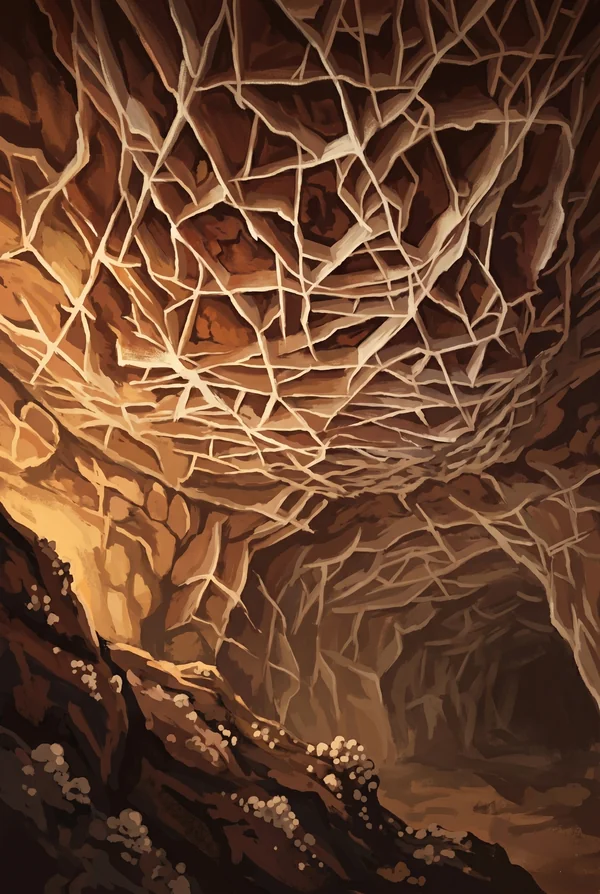
Boxwork Formations
Thin blades of calcite projecting from cave ceilings in a honeycomb pattern, formed when vein fillings resisted the slow dissolving of the rock around them. Roughly 95 percent of all the boxwork known on Earth is in this one cave, which makes it the single most Wind Cave thing there is. The obvious pick for anyone who came for the underground.
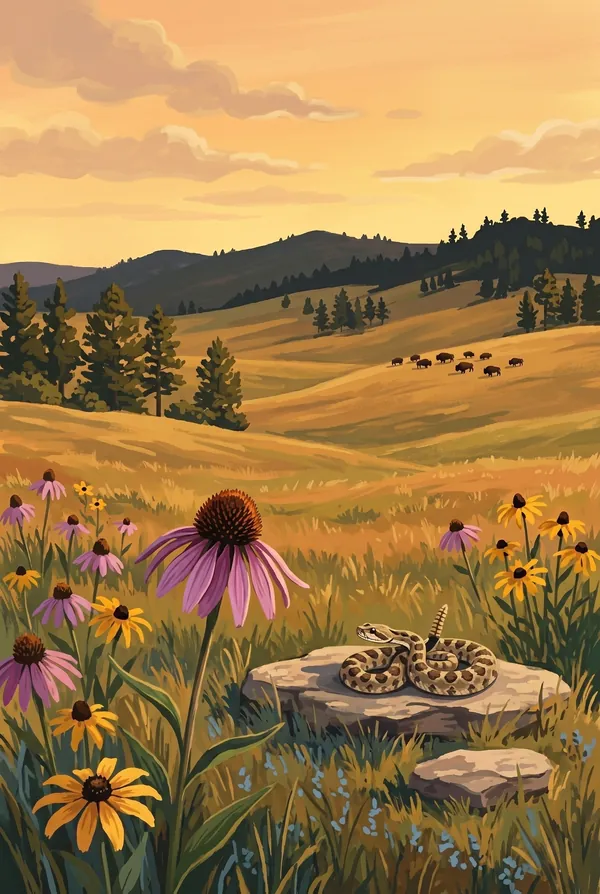
Mixed-Grass Prairie
The roof of the cave: rolling grassland where eastern tallgrass and western shortgrass meet, grazed by bison descended from fourteen animals shipped in by rail in 1913, with pronghorn on the ridges and prairie dog towns spread across the flats. Most visitors come for the cave; this design argues the surface is the equal of it.
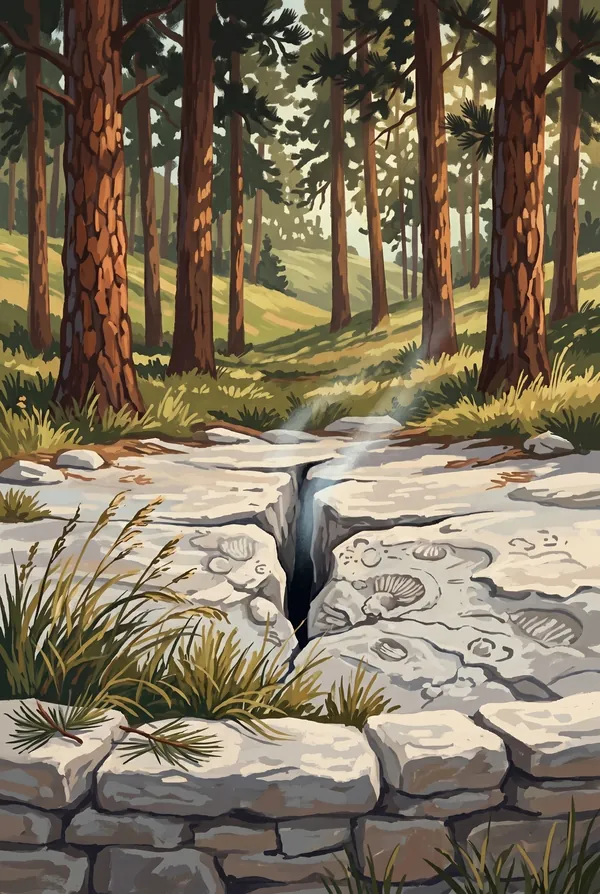
Natural Entrance
A hole in a hillside about ten by fourteen inches, the only natural opening ever found into 168 miles of cave, and the place where the Binghams lost a hat to the wind in 1881. The cave still audibly breathes through it with every swing of the barometer. In the Lakota emergence story, this is where the people came into the world.
How to record your Wind Cave visit
Free, and it works whether you are standing there now or remembering a trip from years ago.
1
Check In at the park
Open ParkStamp inside the park boundary and check in. The app confirms you are actually there and logs the date.
2
Or Stamp It later
Already been? Pick the date yourself. Trips from decades ago count the same as last weekend.
3
Or scan your photos
Let ParkStamp read the dates and locations off photos already on your phone. Most people find parks they had forgotten.
Wind Cave, asked and answered
Quick answers, for people planning a trip and people remembering one.
When is the best time to visit Wind Cave?
The cave holds the low fifties Fahrenheit every day of the year, so the underground half of the park has no season at all. Above ground, late April and May put calves in the bison herd and green in the prairie, September and October bring bugling elk and golden grass, and summer afternoons build thunderstorms you can watch cross the whole sky. Winter is the quiet bargain: cold prairie, empty trails, same cave.
How many days do you need at Wind Cave?
One full day does both halves properly: a cave tour in the morning, then the park drive and a prairie walk among bison and prairie dog towns in the afternoon. A second day adds Rankin Ridge, the highest point in the park, and the Lookout Point-Centennial loop; the rest of the Black Hills sits immediately north when you finish.
How busy is Wind Cave?
Wind Cave National Park logged 606,258 visits in 2025, the 37th busiest of the 63 national parks. That makes it one of the quieter national parks, and crowds are rarely the problem.
What does the Wind Cave stamp show?
The lead Wind Cave design is Boxwork Formations. Thin blades of calcite projecting from cave ceilings in a honeycomb pattern, formed when vein fillings resisted the slow dissolving of the rock around them. Roughly 95 percent of all the boxwork known on Earth is in this one cave, which makes it the single most Wind Cave thing there is. The obvious pick for anyone who came for the underground. The other two designs are Mixed-Grass Prairie and Natural Entrance.
Is the Wind Cave stamp free?
Recording your Wind Cave visit is always free: check in at the park, add an old trip, or let the photo scan find it. The full-color art is the paid part, $3.99 one-time with three Wind Cave designs to choose from, and the first stamp you collect in ParkStamp is free.
Can I add a Wind Cave trip from years ago?
Yes. Open Wind Cave in ParkStamp, tap Stamp It, and set the date yourself; a visit from decades ago counts the same as last weekend. If you still have photos from the trip, the photo scan can find and date it from their location tags, without your photos ever leaving your phone.
Do I have to be at Wind Cave to get the stamp?
No. Check In is for when you are standing inside Wind Cave, and it confirms you are actually there. Stamp It records any past visit on your honor, with your dates. Both are free and put the same stamp in your StampBook.
Start your StampBook with Wind Cave
Free on iOS and Android. Your first stamp is on us.