The smallest national park in America, at about 91 acres of downtown St. Louis riverfront, and the only one whose centerpiece is a work of architecture: a 630-foot stainless steel arch that is the tallest man-made monument in the United States. Insurers budgeted for thirteen deaths during its construction. There were none.
Gateway Arch is one of the 63 national parks in ParkStamp, and like every one of them it has original stamp designs in the WPA poster tradition, each design a picture of a specific real place, even when that place is made of stainless steel.
Recording a visit is free. Check in under the Arch, add the family trip from decades ago, or let the app find the dates and locations in photos already on your phone.
The real NPS boundary, with the roads and towns you would actually use to get there.
Gateway Arch, for people who count parks
A monument that congratulated the wrong architect, and a courthouse that matters more.
The memorial is older than the Arch by thirty years. Franklin Roosevelt created the Jefferson National Expansion Memorial in 1935 to commemorate the Louisiana Purchase and the westward expansion that ran through St. Louis, and some forty blocks of the old riverfront were leveled to make room for it. What would fill the space was decided by a design competition in 1947–48, which produced one of architecture's better telegrams. Both Eliel Saarinen and his son Eero entered. Officials mistakenly notified the father, and the family had already toasted him with champagne when the correction arrived: the winner was Eero, then in his thirties, with a plan for an enormous steel arch.
The curve is a weighted catenary, the shape a hanging chain makes, inverted, with the proportions adjusted so the legs carry their loads straight down. It is 630 feet tall and exactly 630 feet between the legs. Construction ran from 1963 to October 28, 1965, with crews building each leg out over empty space and creeper cranes climbing the sides. The actuarial tables used in planning assumed thirteen workers would die. Zero did. On the final day, sun expanded the south leg enough that fire hoses were turned on the steel to cool it before the last section could be forced into the gap. The tram that carries visitors up through the hollow legs was designed by Dick Bowser, a self-taught elevator man who was given two weeks to figure out how to move people through a curve.
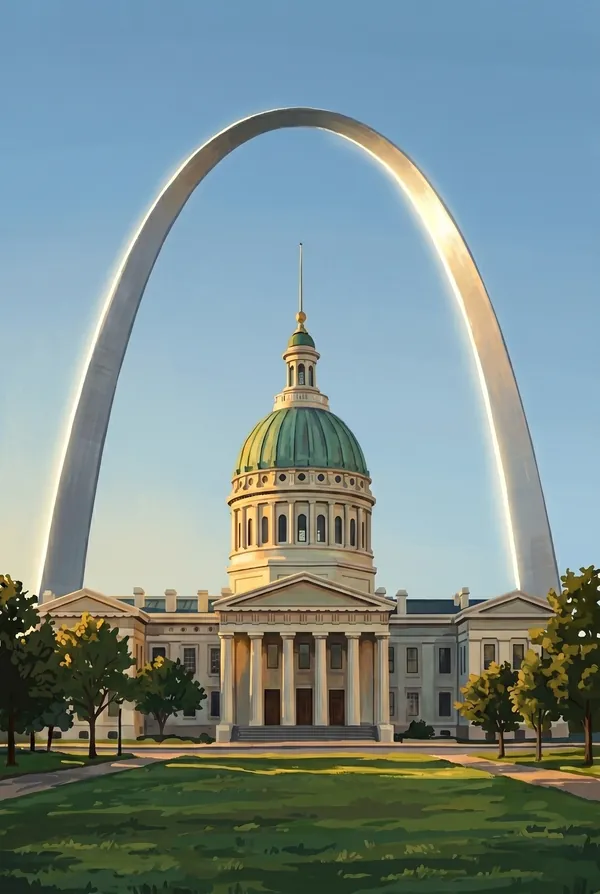
The Old Courthouse is the moral weight of the park. Dred and Harriet Scott filed suit for their freedom there in 1846, beginning the case that ended in the Supreme Court's worst decision and helped push the country to civil war. In the 1870s Virginia Minor's fight to register to vote passed through the same building on its way to the Supreme Court. A green-domed courthouse framed between the Arch's legs is the oldest thing in the park and the reason the word "memorial" was never just about geography.
It became a national park on February 22, 2018, by act of Congress, and the arguments started immediately: it is tiny, it is urban, and it commemorates rather than conserves. All true. It is also the one park on the list where the protected resource is an idea: expansion, and what it cost. That makes it a different kind of visit, not a lesser one.
The wildest thing in this park is the river going by it.
The Mississippi is the habitat here. The park fronts the largest river system in North America, and the corridor over it is part of the Mississippi Flyway, the route a huge share of the continent's waterfowl and songbirds follow between breeding grounds and the Gulf. In migration season the traffic over the Arch (geese, ducks, gulls, swallows working the river air) outnumbers anything on the ground.
Under the surface, the river still carries old fish. The big muddy channels of the Mississippi and Missouri are home to species that predate the dinosaurs' extinction by a wide margin: paddlefish, and the pallid sturgeon, an armored bottom-feeder that has been federally endangered since 1990 because dams and channel engineering rewired the rivers it evolved in. Standing on the levee, you are looking at habitat, not scenery.
The grounds themselves are a designed landscape, laid out by the landscape architect Dan Kiley to Saarinen's plan: curving allées of trees that echo the Arch's geometry, ponds, and open lawn where a rail yard and warehouses once stood. It is nature with the intent showing, which, in a park about what people did to a continent, is honest.
The Gateway Arch designs
Pick the one that matches the park you actually saw.
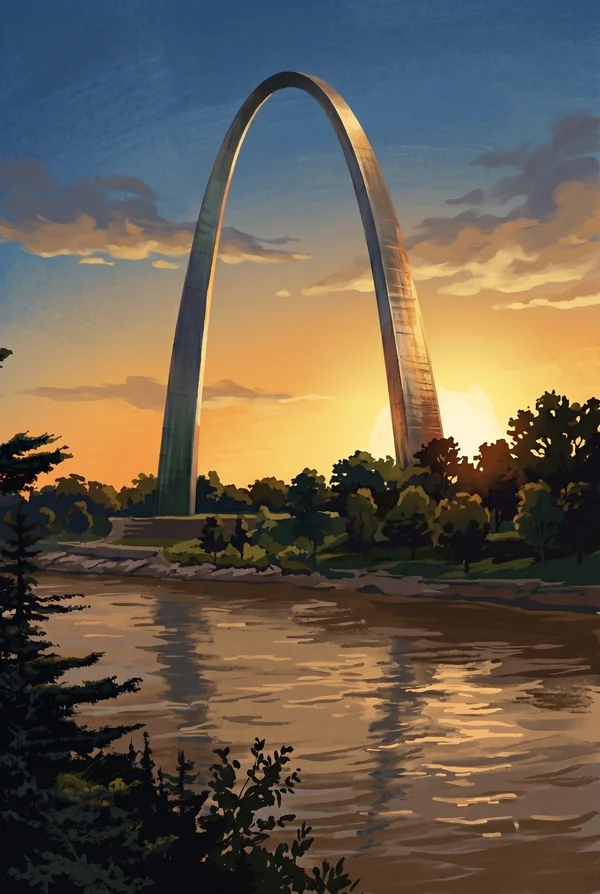
Arch with Mississippi
The classic view: 630 feet of stainless steel on the west bank with the river running past, the surface of the monument changing with every hour of light. It is the tallest arch in the world and the tallest man-made monument in the country, and it reads differently from every angle, which is why most people who visit fill a camera roll with one object.
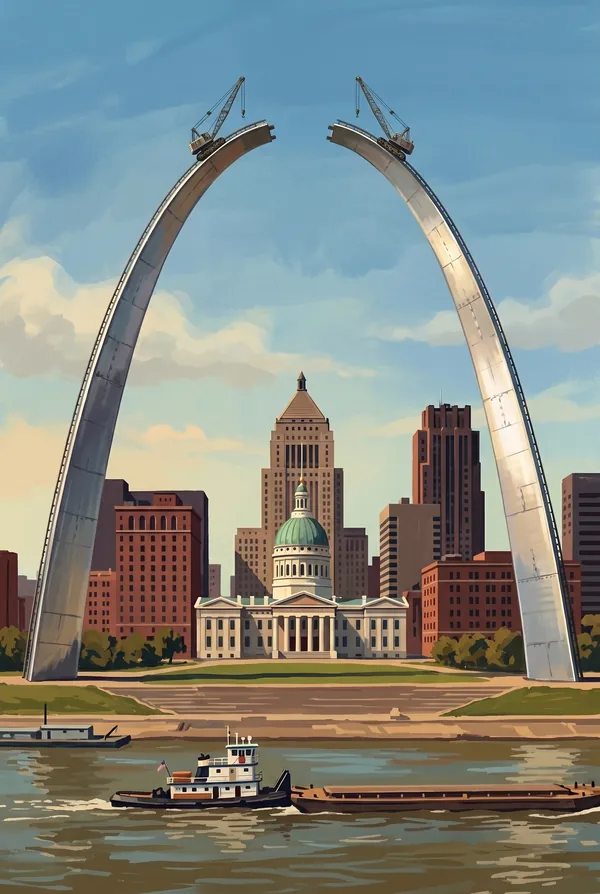
Arch Under Construction 1965
The two legs rising over the riverfront with creeper cranes clinging to them, before the gap closed on October 28, 1965. Planners had budgeted thirteen lives for the job and lost none, and on topping-out day they hosed the sun-expanded steel with water to fit the final piece. A stamp for people who like the story more than the postcard.
Old Courthouse
The green cast-iron dome framed between the Arch's legs. Dred and Harriet Scott sued for their freedom here in 1846, and Virginia Minor's voting-rights case passed through in the 1870s. It is the oldest structure in the park and its conscience, which is a reasonable thing to want on a stamp.
How to record your Gateway Arch visit
Free, and it works whether you are standing there now or remembering a trip from years ago.
1
Check In at the park
Open ParkStamp inside the park boundary and check in. The app confirms you are actually there and logs the date.
2
Or Stamp It later
Already been? Pick the date yourself. Trips from decades ago count the same as last weekend.
3
Or scan your photos
Let ParkStamp read the dates and locations off photos already on your phone. Most people find parks they had forgotten.
Gateway Arch, asked and answered
Quick answers, for people planning a trip and people remembering one.
When is the best time to visit Gateway Arch?
April, May, October and November are the pleasant windows for the grounds and the riverfront, and spring and fall migration put the most birds over the Mississippi. Summer in St. Louis is hot and thick, but the museum and tram are underground and cool. Winter has a case of its own: cold, clear days give the sharpest long views from the top, up to about thirty miles in each direction.
How many days do you need at Gateway Arch?
Half a day covers the core: the tram to the top, the museum under the Arch, and the Old Courthouse. A full day lets you walk the Kiley landscape and the riverfront without watching the clock. This is the one national park you can do properly on a lunch break, which is either the complaint about it or the charm, depending on the visitor.
How busy is Gateway Arch?
Gateway Arch National Park logged 2.21 million visits in 2025, the 15th busiest of the 63 national parks. That puts it in the middle of the pack: busy at the famous spots, quiet a mile past them.
What does the Gateway Arch stamp show?
The lead Gateway Arch design is Arch with Mississippi. The classic view: 630 feet of stainless steel on the west bank with the river running past, the surface of the monument changing with every hour of light. It is the tallest arch in the world and the tallest man-made monument in the country, and it reads differently from every angle, which is why most people who visit fill a camera roll with one object. The other two designs are Arch Under Construction 1965 and Old Courthouse.
Is the Gateway Arch stamp free?
Recording your Gateway Arch visit is always free: check in at the park, add an old trip, or let the photo scan find it. The full-color art is the paid part, $3.99 one-time with three Gateway Arch designs to choose from, and the first stamp you collect in ParkStamp is free.
Can I add a Gateway Arch trip from years ago?
Yes. Open Gateway Arch in ParkStamp, tap Stamp It, and set the date yourself; a visit from decades ago counts the same as last weekend. If you still have photos from the trip, the photo scan can find and date it from their location tags, without your photos ever leaving your phone.
Do I have to be at Gateway Arch to get the stamp?
No. Check In is for when you are standing inside Gateway Arch, and it confirms you are actually there. Stamp It records any past visit on your honor, with your dates. Both are free and put the same stamp in your StampBook.
Start your StampBook with Gateway Arch
Free on iOS and Android. Your first stamp is on us.